2013 Iditarod: Meet Copper

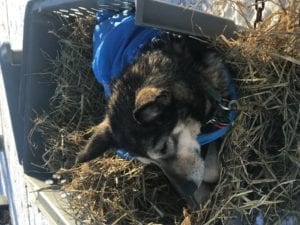
Travis introduces 2013 Iditarod team member COPPER. We bought Copper this fall. Copper is an outstanding cheer leader and has a really smooth gait — he runs beautifully down the trail. When you are watching sled dogs, you always look for the dogs that make it look effortless and that’s Copper to a T. He’s a lover at heart and enjoys running near the front of the team. He is not, by definition a “lead dog” but prefers to run one or two pairs back from the front.

Copper rests his head on his best friend and running partner Kermit


Copper can be a little grumpy but enjoys running next to his best friend, KERMIT. Copper and Kermit ran on Jen Seavey’s Iditarod team in 2009 and ran all the way to Nome together under her leadership. They will be doing the same this year with Travis.

Travis At the Start of the Iditarod

The Anchorage Daily News stopped by the dog truck the morning of the ceremonial start to interview Travis. It was sort of an emotional thing for us. Chris, the guy who did the interview, came to our kennel in Seward, Alaska during the flood. We were really excited we had jut started doing our summer dog sled rides and were looking forward to doing a lot of work to our facilities to make improvements…instead we had to rebuild.


His interview helped connect us with some really wonderful people who helped us get to the starting line after the flood so it was nice to talk to him again at the start. He explains our dog truck, traveling on the road, and rebuilding.

Here’s Chris’ interview from the fall when our house and dog lot were flooding: Musher Undeterred by Seward Flooding

2013 Iditarod Team

So the decision has been made. This is Travis’ 2013 Iditarod team. We’ll be posting more information about the individual dogs as the week goes on. Here’s the team in action and a quick introduction. After all the hard fought battles we’ve faced this season: flooding, no snow, more flooding, warm temps, hectic food drops…we’ve made it. Iditarod is only a few short days away and to say that Travis is more than ready is an understatement!

Travis shot this video yesterday on Exit Glacier Road in Kenai Fjords National Park, where we do a lot of our training and where we run our winter dog sled rides. It was really warm yesterday — 32 degrees — but that is typical of Seward. Our dogs are used to running in warmer temperatures which, given this year, may be a blessing as its been a warm winter throughout Alaska. Instead of the
30 miles Travis thought he was going to do, he decided to do 60 and came home shortly before dark. The dogs looked great when the got back to the yard.

Travis Gets 7th in the Alaska Excursions 40/40 … Beats Jeff King!

This past weekend instead of doing the Sheep Mountain 150 Sled Dog Race which, unfortunately, was cancelled due to lack of snow, Travis took part in the two day Alaska Excursions Race. The Alaska Excursions race is typically a two day event where teams run 60 miles one day and then sixty miles the next. It is set up more as a sprint race than a distance race — in other words, you get to sleep in a warm bed at night. This year, however, due to lack of snow the mushers ran 40 miles each day instead of the 60 they usually do.

Travis took 7th place — something we are tremendously happy with in a sprint type race. So why was Travis running a sprint race? After all, we are a distance kennel! The answer is simple: experience. In fact 6 of the 27 participants will be running in Iditarod 2013 — with half of them finishing in the top 10.

Travis during the 2012 Alaska Excursions 40/40 with Boston and Zema in Lead ©2012HuskyProductions/DonnaQuante

Travis during the 2012 Alaska Excursions 40/40 – Day 1
© 2012 Husky Productions/Donna Quante

So lets break down the race results. First, conditions were hard and fast, allowing teams to really step up in the speed department. There hasn’t been a whole lot of snow so this wasn’t a real surprise. The first day of the event, Travis started in 29th placed and worked his way up to a 9th place finish. Passing teams takes time and can hinder teams in shorter events like this. Fortunately, our dogs passed like champs. Unfortunately, no matter how well our dogs pass, it is important that both teams involved in the pass do well. Travis didn’t have too many problems with other teams, but did mention their were a few “alligators” in the other teams. Alligators are exactly what they sound like —  dogs that try to bite  other dogs while they pass.

Travis’ total time on the first day of the race was 3 hours 23 minutes and 18.00 seconds. The leader, Ryan Redington, finished in 2:49:29.00 — almost exactly a half hour ahead of Travis. With 2nd place through 6th place finishing in 2:55:49.00 through 3:04:43.00. The 7th place finishing team on day 1 (Jeff King) came in almost 15 minutes behind the 6th place finishing team (Robert Redington). Why the huge gap? Well, this reflects a difference in how these dog teams were run in comparison to the rest of the dog teams.

The first six teams are known for and train for speed. The top 3 racer — Ryan Redington, James Wheeler, and Ariane Jasmin — are not running Iditarod. This is important because it ultimately means that they are training differently. You don’t train for the 100 meter dash the same way you train for a 5K and you don’t train for a 5k the same way you train for a marathon. These guys are focused on speedy teams that will excel in short events like the Alaska Excursions race. As an Iditarod kennel, this was not Travis’ focus. In fact, Travis was (and I even more so) hesitant about doing this event due to how different it is from something like Iditarod. Ultimately, we do things like this for experience and for fun — not everything is about winning — at least, not all the time — but you do have to keep the bigger picture in mind.

Boston and Zema in Lead during the 2012 Alaska Excursions 40/40  ©2012HuskyProductions/DonnaQuante

Boston and Zema in Lead during the 2012 Alaska Excursions 40/40
© 2012 Husky Productions / Donna Quante

The fourth place team on day 1 was driven by Cim Smyth (6:04:35) and the fifth place team driven by Wade Marrs (6:07:02), are. Smyth and Marrs are both distance mushers, who are known for speed. They excel in the mid-distance circuit because their dogs are good at shorter races where their speed is an asset. Smyth won the Tustumena 200 last year. Smyth’s fast times in the mid-distance circuit, however, have yet to translate into true Iditarod success. Speed in Iditarod is actually less important then one might think. The important thing for an Iditarod team is the ability to keep moving and to stay in peak condition. Speed deteriorates a dog. It’s tougher on their joints and generally teams traveling faster (especially at the beginning of the race) require more time to heal up. Smyth’s best finish in Iditarod was in 2009 when he finished in 5th. In his last three Iditarods Smyth has finished 24th (2012), 21st (2011), and 23rd (2010). Marrs has been less active in the racing circuit but maintains a very competitive, fast team.  He and Travis are good friends and Travis has been training out of his yard recently. Wade has a team to watch out for in Iditarod 2013.

The next group of distance mushers were about 15 minutes behind the top six racers — the next distance mushers to finish were Jeff King (3:20:32.00), Ken Anderson(3:23:01.00), and Travis (3:23:18.00). King is an iconic name in dog racing. Having won four Iditarods, King certainly knows what he is doing. He scratched from the 2012 Iditarod due to sick dogs. King did not race in 2011. He has finished in the top ten of Iditarod 17 out of his 19 races, including 4 first place finishes, 2 second place finishes, and 6 thirds place finishes. To say King is an impressive dog musher is an understatement.

Ken Andersen, although he has never won Iditarod, still has an impressive record. Andersen finished 12th in the 2012 Iditarod and has finished in the top 10 four times out of the last six years. He has finished in the top 20 for the last ten years. Andersen is consistent and consistency is the mark of a good athlete in any sport.

Travis During The Alaska Excursions 120. ©2012HuskyProductions/DonnaQuante

Travis gives Donna Quante a hello During The Alaska Excursions 120.
© 2012 Husky Productions/ Donna Quante

On day one, of the Alaska Excursions Travis finished 2 minutes behind King and 15 seconds behind Andersen. Travis, however, was also coming off a multi-day camping trip. He signed up for the Alaska Excursions race as an after thought and wasn’t originally planning to race this weekend. He decided to race because it would be fun and it would get the dogs some nice training at passing. In fact, on the first day he passed 21 teams going out and then had to pass them all back as the course was an out-and-back. Most of the dogs in Travis’ team had done anywhere from 70 to 150 miles directly before the race with no days off — not exactly how you prepare if you really want to win. But Travis’ goal wasn’t to win, it was simply to do well and to teach the dogs to pass, to pass with confidence, and what it meant to be a winner. You don’t always need to win to be a winner, and the dogs certainly don’t need to win to feel like they’ve won. Like any athlete, they know when they’ve worked hard and done well and they take pride in it.

Day one of the event Travis had a few problems. One of his dogs also wasn’t at a 100% due to the training she had done prior to the race so Travis was forced to take it easy. Another dog simply wasn’t up for the faster paces this race required. The good thing about this event was it meant that on day 2 he wouldn’t have to take her.Overall, he was happy with how he finished on day one.

Travis During the Alaska Excursions 120 Photo Courtesy of the Anchorage Daily News

Travis During the Alaska Excursions 120
Photo Courtesy of the Anchorage Daily News

Travis approached day two realistically. “I want to catch Ken,” he told me. At the time, he didn’t think he could catch King. Two minutes, even over 40 miles, can be a considerable amount of time to make up. We discussed his line up and he made a few changes. He dropped two dogs who weren’t up to the faster pace of the race — most of our dogs are slow and steady. Some distance mushers drive fast, speedy times with short runs and long rests (like Smyth or Marrs). Not us. We run tortoises. We go slow and steady. We run further distances at  slower paces but our dogs need less recovery time then dogs that run fast and short. If you sprint five miles you are going to need a longer rest then if you jog or walk ten — that’s all it comes down to. So we weren’t surprised. But that doesn’t mean we don’t have speed. Travis brought in a new leader (Madori) and she was excited to be out on the trail.

In a two day event like this, where you go home at the end of the night, one of the true measures of how you have run your dogs is your performance on day two. Always finish stronger than you started. That’s one of the things Travis and I have both taken away from working with various mushers. Build the dogs, don’t tear them down. What was really cool about Travis’ performance on the second day was how much they improved. His finishing time on the second day was 3 hours 8 minutes and 4 seconds. He did the same course only this time he finished almost 15 minutes faster. Wow.

The differences can be attributed to several things — dropping the dogs (Monroe & Mary) and replacing them with others helped. Madori, who was added on day two is a speed demon but had to learn how to pass during the race so while she brought speed she also had to do some learning while she was out there. Madori (mother to Bonnie & Clyde, two of our puppies this summer) loves being up front and is a stellar gee/haw leader. She isn’t the friendliest dog in the kennel like her brother Bud or her sister Zema. She’s shier and keeps to herself when there are strangers in the dog yard — but she’s one heck of a leading lady and when you put her up front you know you’ll have some speed. The faster times can also be attributed to the dogs knowing how long they were going and to pacing themselves. It can also be attributed to the fact that these dogs knew they were racing. They love to pass other teams. “I couldn’t believe how much they’d pick up when we saw another team,” Travis said. “It was like they hit a new gear.”


Travis during the 2012 Alaska Excursions 40/40 photo courtesy of the Anchorage Daily News

Travis during the 2012 Alaska Excurions 40/40
Travis is kicking to help the team to a faster finish on Day 2 of the two-day event.
Photo Courtesy of the Anchorage Daily News

For Travis, his goal was passing Ken. He knew he could make up 15 seconds. He knew all he needed to do was pass Ken and maintain a bit of distance. He and the dogs were working hard to do so and as they turned a corner and started climbing a hill, they came upon a dog team. Only it wasn’t Ken Andersen. It was Jeff King. “I was so excited,” Travis said. He passed Jeff going up hill — something Travis is truly proud of. Jeff stuck with him for a while. Typically, after you get passed, your dogs perk up and try to keep up with the team but after a while Travis and the team left them behind. They then came upon Ken and passed him too.

“I was really happy to see them do what they did,” Travis said. When Travis got to the finish line, one side of his dog truck had been taken over by Wade. It was the side he was coming from and he had no way to steer the dogs to the other side based on how things were set up.  Travis and Wade travelled to the race together to save on gas money . Travis drove the team past the truck, generally considered a difficult thing to do, and then made them break trail and do a turn around so he could hook them off properly. I think he turned some heads.


Travis after finishing day two of the Alaska Excursions 40/40 Photo Courtesy of Greg Sellentin.

Travis after finishing day two of the Alaska Excursions 40/40
Zema (Left) and Madori (right) stand with Travis at the finish of the race
Photo Courtesy of Greg Sellentin.

At the end of the day, the results from the Alaska Excursions don’t mean a whole lot but it gives us a bit of a feel for how our dogs are doing compared to mushers with similar running styles (King & Andersen). Travis walked away with a new pair of beaver mitts for his 7th place finish — majorly awesome  because we didn’t have any good hardy gloves and he had begun worrying that he wouldn’t have anything to keep his hands real warm during Iditarod. More importantly, however, it gave Travis and the dogs confidence. The dogs learned how to be speedy — this was probably the fastest running they’ve done all year — and they learned how to pass. One of the great things about where Travis started on day one, was that he got to do a lot of passing but he was only passed once and quickly passed that musher back. This does wonders for our dogs confidence. They never got passed so for all the dogs know (and for all the love Travis gave them) they think they won. Good. We wouldn’t have it any other way..

Photos in the post were courtesy of Donna Quante & Husky Productions, The Anchorage Daily News, and Greg Sellentin.

Where’s the Snow?

November seemed to come and go without any real excitement and, more importantly, without snow. It’s been cold the last few weeks but the skies have been mercilessly clear. Over the weekend we had our first snowfall. Unfortunately, it wasn’t significant and it rained after so Travis went north. At this point he’s spent more time in Knik training with fellow musher (and good friend) Wade Marrs than in Seward.

The Team out at Kenai Fjords National Park
I stayed in town and managed to put on about 70 miles on my team over the weekend and do some oddball projects. As we move into the heart of mushing season, we get less and less time to ourselves, to our families, and to each other so we’re doing all that we can now to make life simpler later on. Over the weekend I prepared a bunch of freezer meals for our crockpot. If you live in Seward and want to help the kennel out, this is a simple & cheap donation that makes our lives easier, healthier, and tastier. I made these meals for nights when we’re too busy or tired to cook. Simply thaw and throw in the crock pot. My type of cooking! I’ve started working on some pasta dishes — and no, I haven’t gotten around to making a lasagna yet — to bring up north with us when we train out of our friends house.

 24 Buffalo Chicken Burritos ready for days when we're too busy to make lunch
I’ve also started making burritos. They’re good trail snacks and easy to eat one handed. We like every sort of burrito: breakfast, bean, chicken…they’re all delicious! I feel like I’m slowly winning the battle, but I’m not convinced that I’ve won the war just yet… Lots and lots more to do but slow progress is still progress.

The dog runs went well. It was our first trip out to Kenai Fjords National Park with the dogs and I was excited to get out there. They close the road to the park in the winter so people can mush, ski, and snowmachine out there. It’s such a beautiful place in the wintertime. We love seeing the mountains covered in snow and there is usually wildlife to be seen. We’re excited to do our first season of winter tours out there — what a beautiful place to share with our guests.

Jane & Rags in Lead
Travis took all the dogs contending for his Iditarod team with him North so I had mostly puppies and no real lead dogs. It made for an interesting run, especially because to get out to the park you have to carefully navigate the dogs through a gate about 3.5 feet wide — barely wide enough for my fourwheeler. I was impressed. We went out a total of 4 times and they did it flawlessly all but the first.

On my first run, I saw 5 moose including two bulls. When we see moose they’re almost always in the same spot: right by the park entrance. In heavy snow years they can present a problem but with so little snow they’re happy to stay away from the dogs and don’t try to hold there ground quite as much. We also ran into some cross country skiiers and the puppies on my team were terribly frightened by the strange humans with large feet. By the end of my trip, all but 1 dog had learned that the skiers didn’t present a threat. They all passed exceptionally well.

Travis did a similar trip up north with his dogs — though he camped out on the trail.He said the dogs did great but he was quite sick and is currently fighting the flu. Still, he went out and trained because that’s what is needed. “I only got real sick a couple of times,” he told me. He broke trail most of his run which made it tough for the dogs but was excellent training.

Everyone has got to grow up sometime, today it was their turn. Clyde (top left) Bonnie (Bottom Left) Brain (Top Right) & Pinky (Bottom Right)
Today, I tied the puppies up to their houses. It’s always bittersweet — it means they are growing up and becoming real sled dogs and losing that cute puppy charm. They whine and protest loudly at first, yanking on the end of their chains trying to get their collars to pop off their heads. Archie ran around while they were screaming and tried to calm them down. Today they were greeted by our neighbor, a large bald eagle who has made it a habit to come sit in our dog yard during the morning. His nest is in our yard and for the longest time we were afraid that our dogs would scare him away — but I think if anything, the dogs have become a source of entertainment for him and his young. He often sits and watches them and occasionally we leave a frozen fish out for him. You can bet he enjoys that.Today he came when the puppies started screaming and he started screaming back at them. It always interesting to watch different species interact and there was no doubt in mind that they were trying to communicate with one other. The puppies would whine, the eagle would screech and the puppies would whine back. On and on it went. Who knows what, if anything, they said to one another. The eagle’s son came and sat in the tree to for a while, though he was less vocal.

The last week we’ve been busy with events. On Wednesday we went to the Seward Elementary School and did a short Q&A on dog mushing. It was a blast. The Student Leadership Team, one of our sponsors, helped set it up. The team is composed of 4th, 5th, and 6th graders — they’ve been far too kind and it’s been great working with such a  young, talented, enthusiastic, group of kids. They sure make us feel special and have been a wonderful sponsor to work with.

On Thursday we hosted a Family Night at the Seward Brewing Company. We played pin the booty to the dog, had dog mushing themed coloring, brought Archie and Bonnie to meet all the kids, and had hot cocoa. It was really fun to take a break from the lonesome dog trails and to get out and be a part of the Seward community. We feel really blessed to be part of such a wonderful town and we’re really happy to be able to do something for the kids.

Santa & Travis on The Green Machine. Photo Courtesy Of ASLC
The week before we delivered Santa Claus to the Alaska Sea Life Center’s Tree Lighting Ceremony.  We drove the dogs through a parking lot (no obvious trail) and through a crowd of people. It went flawlessly. We were thrilled to see how well trained our lead dogs are. It’s quite impressive and I have to think that our summer dog sled tours really helped. Our tour is SO COOL because we use it as real training: our dogs are constantly listening to commands. We used it as an opportunity to fine tune their abilities and to train a few new leaders. We’d like to thank the Alaska SeaLife Center for sharing their photos with us and for letting us be a part of their holiday celebration. What a blast!

Ready To Go! Santa, his "Elf", and his "Reindeer." Photo courtesy of ASLC

In other news, our first race of the season, The Sheep Mountain 150, was cancelled yesterday due to lack of snow. While we are disappointed, we are not devastated. We have many other races to look forward to and are hoping that the snow will get here soon.

Well that’s it for now. We are looking for a few homes for some of our dogs who aren’t quite cut out for competitive mushing / life as a sled dog. If you are interested in adopting one of our dogs or know someone who may be interested, please email us at Info@TurningHeadsKennel.com  All are friendly, good with kids, and are loved tremendously by us so we’d like to see them put in a good home. We’ll post more on this later with pictures and descriptions of the dogs but please keep us in mind if you know someone who is looking. These are AWESOME dogs.

Happy Trails.

Turning Heads Kennel & The Seward Brewing Company Present Family Night on Thursday December 6th from 5-7pm

Join Travis Beals, 2013 Iditarod Rookie and owner of Turning Heads Kennel, at the Seward Brewing Company this coming Thursday December, 6th from 5-7 for family night. Kids will enjoy playing dog sled themed games, and young and old alike will enjoy meeting a few members of Beals’ kennel — including some puppies, and learning about mushing. Beals has lived in Seward his entire life and has owned and operated his own kennel since the age of 14. He is an accomplished racer having placed second in the 2009 Jr. Iditarod.  He also received the humanitarian award for best dog care in the 2010 Tustumena 200, and recently finished 3rd in a very competive field for the Northern Lights 300. Beals’, 21,  is tremendously excited for the upcoming Iditarod; it’s been his goal since grade school.

“I love mushing and there is nothing more satisfying than sharing my passion.” He is looking forward to meeting the young faces in Seward Thursday night. “I got interested in mushing when I was a kid, so sharing it with kids is something really special. You never know, who you could be encouraging,” he said. “I hope to inspire a new generation of Seward mushers.”

Thursday’s festivities will also include a chance to take a picture with a dogsled and to try on some mushing gear.  In addition to racing, Beals recently started offering dog sled rides this summer out of his home on Exit Glacier Road to help pay for his racing.

Delivering Santa &Training Update

This Entry Appeared in the December 12, 2012 Edition of the Seward Journal

Mother Nature is such a tease. For the past two months we have had bitterly cold weather without the slightest hint of snow. We are not alone in our search for it. Mushers all over are collectively asking, “Where is the snow?” To make matters worse, until the snow arrives, our trails in town are exceedingly limited. The long runs needed at this time simply cannot be done in Seward. We’ve been forced to do a lot of travelling.

Travis has now spent more time in Knik this November than he has here in town. He’s stayed with mushing friends and has enjoyed the long uninterrupted runs he’s been able to put on the dogs.

Photo Courtesy of Barb Redington
The dogs to impress us. We often compare our team to a freight train; they start their runs slow and gradually they gain momentum. At times they seem invincible, roaring up steep hills with a casual elegance that makes us wonder if they are really even working. We suppose they must be, but they simply make it look easy. They often end runs stronger and more excited than when they began. These are things we love to see. Just last week the dogs covered about three hundred miles.

On Thursday, we came home and participated in the Tree Lighting Ceremony at the Sea Life Center by delivering Santa with the dog team. We used our four-wheeler because there wasn’t enough snow. The dogs didn’t mind though, we’ve been training on the four-wheeler for almost three months now.  We have to admit that we were a bit nervous though: our dogs have never run in crowds or in parking lots so we were putting them to the test. 

We truly were impressed with our lead dogs, Tamere and Boston, who drove the team through the crowd as if they had been doing their entire lives.  It was magical giving back to a community who has been so supportive and to see our dogs take right to it. Travis steered them around the parking lot as if that is where they had been running their entire lives. It was awesome. We hope you enjoyed it as much as we did.

If anyone has pictures or videos from Thursday night we would love to see them. You can either post them to our facebookpage: www.facebook.com/turningheadskennel or email them to us at info@turningheadskennel.com

All About Fall Training

We’ve received a lot of questions recently regarding fall training: what is it, how do we do it, and why. Well, Fall Training is an integral part of what we do  here at Turning Heads Kennel. During fall training, the dogs transition from doing light running during our summer tours to building up muscles and conditioning themselves in preparation for the longer runs required for racing 200 & 300 mile events as well as the Iditarod. So without further adieu, here is our Fall Training 101 Q&A.

How do you train dogs in the fall?

In the fall, we train dogs on an ATV. Generally, we hook up between 10-16 dogs. We enjoy training on the ATV: we have loads of control and besides being just a vehicle to train the dogs with, the ATV can actually act as a training mechanism. We can put the ATV into gear. When we put the ATV into first gear, the dogs have to work against the engine of the machine making for a tougher pull. It also slows the dogs down. Generally, we don’t run the dogs in first gear a whole lot. It’s bad for the machines and we believe that they don’t need to be working quite that hard. More often than not we’re in 3rd or 4th gear or in neutral, but it’s a fine balance. We like our dogs to run at a steady trot. Generallly, in 3rd or 4th gear to keep the dogs from going to fast light braking may need to be applied.

The benefit of running the ATV in gear is you can use the gas of the machine as positive reinforcement if you are working with new leaders. For example, you come to a 3 way intersection and you say “Gee” (the command to go right) if the dog begins to go right, you can give the machine a little gas and the dog a “good dog!” reaffirming that the dog made a good decision. If the dog however went to the left, you apply the brake of the machine. As soon as the lead dog begins to look toward the right/gives an inclination that he thinks going to the right is a good idea, you give a little gas. In that way, all we are doing is taking the dogs own desire to run and go forward, and channeling it. Running becomes the positive reinforcement, stopping the negative.

What are the benefits of fall training?

The greatest benefit of fall training is the control using an ATV gives you. You can set the pace of the team. We like to use fall training as the time to teach our dogs to travel. We want them to learn that trotting is the most efficient way for them to move down the trail and that we want them trotting from the beginning of a run.

What are your trails like during the fall?

Unfortunately, here in Seward we are severely limited by the number of trails we have. The recent flood destroyed most of our trails and we are currently running a small section of dirt road by our house and the trails we use for our summer dog sled ride.

You run on dirt roads?

Yes. Dirt roads are great to run on. We’d obviously prefer trails. Dirt or silt is ideal — it doesn’t hurt the dogs feet and they can run for quite awhile on it without wearing their pads down, but we are limited by what is available to us.

Do you have to watch out for cars or people?

Unfortunately there are many hazards associated with running our dogs on dirt roads, traffic being one of them. Fortunately, we don’t have to worry about our dogs. They have learned that they are supposed to run on the right side of the road, even when taking corners — something hard for them to do as they generally like to cut the corners. We don’t worry about our dogs passing vehicles or that sort of thing,they are very accustomed to it. What we do worry about is inattentive drivers or impaired drivers, but that’s something everyone worries about. We run a lot at night, when it’s cooler. It also makes it easier to see cars coming.

We actually pass lots of bikers, walkers, and other dogs. They are never an issue. The biggest problem we have is rabbits. We have a few lead dogs who enjoy chasing them and for whatever reason our neighborhood is plagued by an overabundance of them.

How far do you run in the fall?

You have to strike a fine balance in the fall between running enough and not running too much. The main concern about running this time of year is the dogs’ feet. Running on the dirt roads tears them up. We want to be conditioning the dogs but we don’t want to hurt their feet either. Generally, we find a balance that works. Once the snow comes, we don’t worry. Even 2  inches would protect the dogs feet sufficiently; we would still train on the ATV as that’s not enough to safely stop a dog team on a sled. That’s sort of where we are at right now, waiting for the snow so we can run a little further.

Is there any way to protect the dogs feet?

Yes. We use dog booties. Sort of like little socks for their feet. Unfortunately, they wear through very quickly in the fall time and it isn’t the most cost-effective means for training. Generally, we put a fleece bootie on to cushion the dogs pad and then put another “normal” bootie over top.


If you have any more questions about fall training please email us at Info@TurningHeadsKennel.com Next week we will do a Q&A with Travis about his Iditarod Training. Please email any questions you’d like answered then!

Joe

Joe is the energy, and enthusiasm in our dog team. When we were evacuating the dogs for the flood, all the dogs were calm: they knew, somehow, that they were not going for a dog run. Not Joe! He started barking and screaming his excitement. When we unloaded him, he was clearly disappointed that we were not hooking him up to go running.

Joe at his house, excited to have his picture taken.

He is strangely delicate: his long wirey legs are propped up by four of the tiniest dog feet I’ve ever seen. Most of our puppies have feet bigger than his. But perhaps it’s those tiny feet that make him move so effortlessly. His brown, beady eyes protrude from his rather pointy head. He looks like he was built for speed. He’s fast, but that’s not why we are honoring Joe. Joe is the cheerleader. He’s the one that gets the team going. Every team needs a dog like that (or two or three!).

“Joe you ready,” we’ll ask and it doesn’t matter how far we’ve run or how many times we’ve been around the trail, Joe will lunge into his harness with all get out. He is one of the most excited dogs I’ve ever seen. Most dogs settle down after running for a little while. Most dogs, don’t continue that enthusiasm day after day after when they are running the same 2 mile loop over and over again. Most dogs, but not Joe. When we’d stop out on the trail to take pictures during tours for our guests, Joe would always be the first one to start barking as if to say “Alright already, they got their photos, what’s the hold up!”

Joe is the energy of the team

“Why does he bark so much?” Guests would ask. We’d explain he was excited and often say something along the lines of “he’s too stupid to know any better,” but really that couldn’t be further from the truth.  Typically, Joe runs at the back of the team. We like to tell our guests that’s where you put the blockheads, the dogs without brains who will just go! go! go! but lumping Joe into the category would be unfair. He is a very intelligent dog who, for the first time, ran lead last night. He is a good trotter and an excellent pace setter. Enthusiasm is important — attitude is everything — but so to is the physical ability to do the work. Joe is a powerhouse: smoothly gaited, efficient and beautiful to watch — but he also knows his limits. He finished Iditarod last year and will be a great addition to this year’s team.

Changing Weather

It’s been cold out. When you walk outside in the morning the cold air hits you like a slap in the face. It’s a great way to wake up. We’ve been slowly building the mileage up on the dogs. They’re back to doing 20 mile runs again. You can tell they’re happy to be running further but our lack of trails means we are simply doing more and more loops of the same. We tried venturing out onto some of our old training trails early this week only to discover how badly they’d been hit. The soft, small gravel that once graced these paths was swept away and replaced by large rocks that are not good for dog feet or dog wrists.

So, with that, we decided to pack the dogs up and head twenty minutes down the road to another set trails. Unfortunately, when we got there, we discovered the same thing: wash out. It was a little demoralizing to say the least. On the drive home, the clutch on our truck went out. It seems like its just been one misadventure after another or as they say: when it rains, it pours. While we’ve seen our fair share of rain, I’m happy to report that we’ve had beautiful, glorious sun shine for almost two weeks now. The cold is good for that.

Turning Heads Kennel travels down Old Exit Glacier Road as a part of Fall Training

The winds have been picking up slowly too. We wake to snow covered peaks then watch, slowly, as the snow gets blown from the mountain tops. The dogs are happy in their houses, safe out of the wind, their own howls muffled by mother natures’. When we’ve run the dogs, we’ve been tremendously impressed by the cadence and rhythm of the team. They move with grace, style, and ease. We’re happy at their progress, not only in terms of miles covered but also in how they’ve become their own unit. They are a team.

Watching their gate, the subtle movements of their legs and hips and shoulders all in unison, it’s easy to get lost in the moment. On a dog team is a very peaceful place. As we pass the trees with their shriveled leaves, it’s hard not to think of all that’s happened this last year. Fall has always seemed to be a natural time for reflection for me. The stark change between summer and winter begins settling in, and it’s impossible not to reflect on all that’s happened, as you see the myriad changes unfold before your eyes.

Travis Prepares for Winter

Last October was such a pivotal month. Humbling, really. It’s hard to forget the things that bring you to your knees. The dogs who made you, who changed you, and who inevitably had to  leave you. It’s impossible to forget the dogs who got you to where you are today, so we’ve been thinking a lot lately about both Hatchet and Chena who passed away almost a year ago. Even though we are in a completely new home and have a completely new dog lot, it’s still strange not seeing them here. They would have loved calling this place home. I don’t think the pain of losing someone whether it be a person or pet, ever truly goes away,  but I do think that time can wash over it, dulling it a little. We’ve found new things to pour our hearts into: new dogs to love on and who loves us,  but there are always little reminders —  like the pictures we print and display or the paw print you so desperately cling to. I like to think that each dog changes us, whether you have one dog or forty of them, and when you lose that dog a part of you changes

We’ve come so far since last year. It’s hard not to be proud of our dogs or ourselves. We moved.  I started my qualifiers for Iditarod and Travis finished his. We bought a house. We started a business. We reclaimed our back yard. We built a dog yard. Travis signed up for Iditarod. We built a gift shop. We built a garden. We did many, many dog tours over the summer. We built a bunch of brand new dog houses and then painted them whacky, fun colors. We had 3 (thankfully small!) litters of wonderful puppies. We flooded. With help, we built a new dog yard. We made new friends. We are rebuilding our basement. We are rebuilding our giftshop. We signed up for several dog races. We went to a tourism conference. We are conquering the obstacles that are in front of us. We are working hard. We are going places.

Max enjoys taking a hike with Sarah earlier in the week