• Skip to primary navigation
  • Skip to main content
  • Skip to primary sidebar
Turning Heads Kennel

Turning Heads Kennel

Alaska Dog Sledding Tours

  • Home
  • Tours
    • Summer Tours
      • Summer Dog Sled Ride
      • Summer Dog Sledding & Gold Panning Combo
      • Helicopter Glacier Dog Sledding
      • Flight Seeing 🚁
    • Winter Tours
      • Winter Dog Sledding Tours
  • About Us
    • Our Mushing Philosophy
    • 2025 Crew
    • The Dogs
      • Meet the Dogs
      • Learn About Dog Sledding
      • Adopt A Retired Sled Dog
    • Our Life
      • Travis Beals
      • Sarah Stokey
      • Our Story
      • Racing Schedule
      • Travis Beals Racing History
  • Contact
  • Shop
  • Support
  • News
  • Show Search
Hide Search
You are here: Home / News

News

How Sled Dogs Keep Their Feet Warm

Sarah · March 30, 2026 ·

A practical look at protection, adaptation, and daily care

One of the most common questions we get—especially from people seeing sled dogs for the first time—is how their feet handle the cold.

It’s a fair question.

Dogs are traveling across snow and ice for hours at a time, often in temperatures well below freezing. But between natural adaptation and consistent care, their feet are remarkably well-equipped for those conditions.


Built for the Cold

Sled dogs have several natural advantages when it comes to handling cold environments.

Their paw pads are structured differently than human skin. They contain fatty tissue that resists freezing and provides a level of built-in insulation. Combined with a dense coat—including fur between their toes—this helps reduce direct exposure to snow and ice.

Circulation also plays a role. Blood flow in the extremities is regulated in a way that helps retain core warmth while still protecting the feet from freezing.

These aren’t accidental traits. They’re the result of generations of dogs being selected for their ability to travel and work in northern climates.


Why Booties Matter

Even with those natural adaptations, protection is still essential—especially over long distances.

Booties are one of the most visible parts of sled dog care. They act as a barrier between the dog’s feet and the trail, protecting against abrasion from ice, hard-packed snow, and uneven terrain.

In practice, we use them regularly—not just when it’s extremely cold, but as part of a consistent routine. It keeps the dogs’ feet in good condition and prevents small issues from turning into bigger ones over time.

Dog Booties are an important part of dog care and one of the biggest racing expenses in Iditarod
How Sled Dogs Keep Their Feet Warm 2

Daily Maintenance and Awareness

Foot care is something that happens continuously, not just at the start or end of a run.

Dogs’ feet are checked often—before runs, after runs, and at stops along the way. We’re looking for small changes: a spot of wear, a crack forming, or anything that could become uncomfortable if ignored.

If something does come up, it’s addressed early.

That’s really the theme of sled dog care overall—small adjustments, made consistently.


Conditioning Over Time

Like anything else in mushing, durability is built gradually.

As dogs train, their feet adapt. Pads become tougher, and tolerance to different trail conditions improves. This doesn’t happen overnight—it’s the result of steady exposure and thoughtful progression.

The goal isn’t to push through conditions. It’s to prepare for them.


Rest and Recovery

When dogs stop, keeping them out of direct contact with the snow matters.

At checkpoints or on the trail, we use straw to create a dry, insulated place for them to lie down. This helps protect both their bodies and their feet from prolonged exposure to cold surfaces.

Rest isn’t just about recovery—it’s also part of maintaining overall condition, including foot health.


A System, Not a Single Solution

There isn’t one thing that keeps sled dogs’ feet warm.

It’s a combination of factors working together:

  • Natural adaptation
  • Consistent protection
  • Regular monitoring
  • Thoughtful training
  • Proper rest

When all of those pieces are in place, dogs are able to travel comfortably and efficiently—even in conditions that would seem extreme from the outside.


Final Thought

Sled dogs are built for the environments they work in—but they’re also supported by a system of care that’s developed over time.

Foot care is a good example of that balance.

It’s not left to chance, and it’s not reactive. It’s part of the daily rhythm of working with these dogs—and one of the many ways we make sure they stay healthy, comfortable, and capable on the trail.

Second Place, Full Heart: Travis Beals’ 2026 Iditarod Reflection

Sarah · March 23, 2026 ·

A Season That Meant More Than the Finish

Some races are measured by placement. Others are measured by what it took to get there.

This year’s Iditarod was both.

Coming off a season that held both deep joy and deep loss for our family, this race carried a different weight. It wasn’t just about competition or results—it was about showing up, staying steady, and continuing forward through a season that asked a lot.

When Travis crossed under the burled arch in second place, it was an incredible finish. But what mattered more was everything behind it—the team, the dogs, the quiet moments on the trail, and the strength it took to keep moving forward.

At the finishing banquet, Travis shared a few words. We wanted to share them here—not as a highlight, but as a reflection of what this race truly meant to our family.

Travis Beals 2nd Place Iditarod 2026 Nome
Second Place, Full Heart: Travis Beals’ 2026 Iditarod Reflection 4

Travis’s 2026 Iditarod Finishing Speech

I want to start by saying thank you.

This race is never just one person—it takes a whole team to get a dog team to Nome, and I’m incredibly grateful to be standing here tonight.

First, to my wife, Sarah…

Thank you for everything you carry so that I can do this. You hold our family together through the chaos of training, racing, and all the in-between moments. Your strength, your belief, and your steadiness mean more to me than I can put into words.

To my boys, Elias and Emmett…

You are my why. Everything I do out there on the trail is tied back to you. I love you.

To our team—Haleigh, Ibi, Matt, and Sam—thank you for showing up day after day and putting in the work it takes to make something like this possible. This finish belongs to you as much as it does to me.

And to this group of dogs…

Some of them stood under the burled arch last year with Ebbe. To see them come back and do it again—it says everything about who they are. Their consistency, their heart, their willingness to keep showing up… it’s something I don’t take lightly.

This season has been a hard one for our family.

My mom… she’s the reason I ever got into dogs in the first place. She believed in this long before I ever did. She passed away this winter, but I can tell you—she was out there with me the entire way. In the quiet moments, in the tough stretches… I could feel her. And I know she would have been really proud of this team.

And the dogs…

They’ve given me more than just a race.

They’ve given me a place to put my grief.

They’ve given me a reason to stay present.

They’ve allowed me to come home and be fully there for my kids.

There’s something about being behind a team of dogs that demands you show up exactly where you are—and that’s been a gift this year.

To all the competitors—this was a great race.

Jessie, congratulations. You ran an incredible race, and it was fun to be part of it. I’m already looking forward to lining up with you again next year.

And finally, to everyone who followed along, who supported from afar, who believes in what we’re doing—thank you.

We don’t have big sponsors behind us. What supports our racing is our summer business. So if you’re ever in Alaska, we’d love to see you—whether that’s out on Godwin Glacier with Seward Helicopter Tours or visiting us at Turning Heads Kennel. When you come out, you’re directly supporting these dogs and this lifestyle.

Thank you again.

Go dogs go.

Why We Chose to Share This

We don’t share this as a highlight reel moment. We share it because it reflects what mushing really is. It’s not just about speed or standings. It’s about:

  • Partnership between dogs and musher
  • The people behind the scenes who make it possible
  • The way the trail has a way of meeting you exactly where you are in life

This year, the dogs gave Travis something we’re deeply grateful for—focus, purpose, and a place to process a difficult season.

That’s something we carry forward long after the race ends.

If You Want to Be Part of This

One of the things people don’t always realize is that for teams like ours, racing is supported by what we do outside of the race.

We don’t have large sponsors behind us.

Our summer tours—both at Turning Heads Kennel and out on Godwin Glacier with Seward Helicopter Tours—are what allow us to train, care for these dogs, and continue racing at this level.

When you visit, you’re not just booking an experience.

You’re stepping into the world behind it.

And you’re directly supporting these dogs and this way of life.

Looking Ahead

The race ended in Nome. But the work, the care, and the connection with these dogs continues every single day.

We’re proud of this team.

We’re grateful for this season.

And we’re already looking ahead to what’s next.

Amaree Barfield

Sarah · May 9, 2025 ·

After graduating from high school, Amaree flew up to Alaska for the opportunity to work and learn with Turning Heads Kennel as a Glacier Guide, which set the stage for his guiding career. After the summer, he headed to Northern Finland for the winter, where he trained, learned, and guided sled dogs along the Finnish-Russian border. A big mountain and backcountry snowboarder, Amaree is always seeking new journeys of knowledge and experience in the mountains, with the goal of becoming an Alaskan Splitboard and Winter Guide.

James McBryde

Sarah · May 9, 2025 ·

Originally from Mississippi, James moved to Alaska to follow his passion for working with dogs. A pre-vet student at Mississippi State University, he spends most of his time studying and caring for animals. When he’s not immersed in his studies or working with dogs, you’ll find James out exploring the great outdoors—whether it’s hiking, kayaking, or fishing, he’s always ready for an adventure!

This is James’ first season with us. We are excited to have him join our team.

Glacier Camp Setup is Underway!

Sarah · May 7, 2025 ·

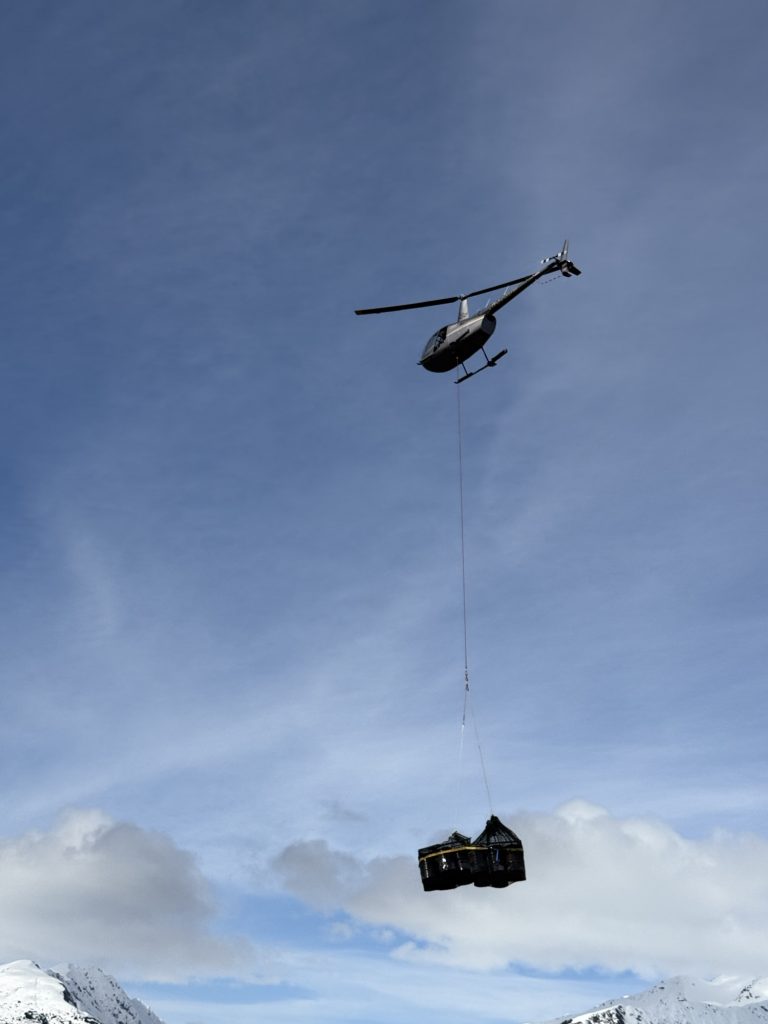
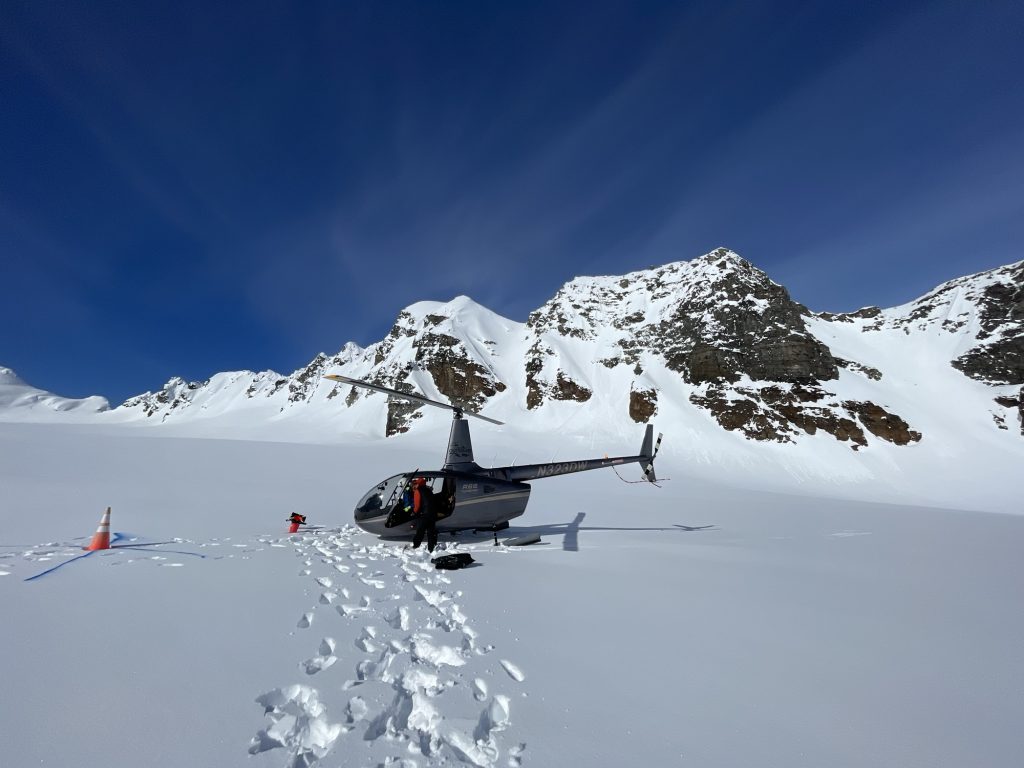
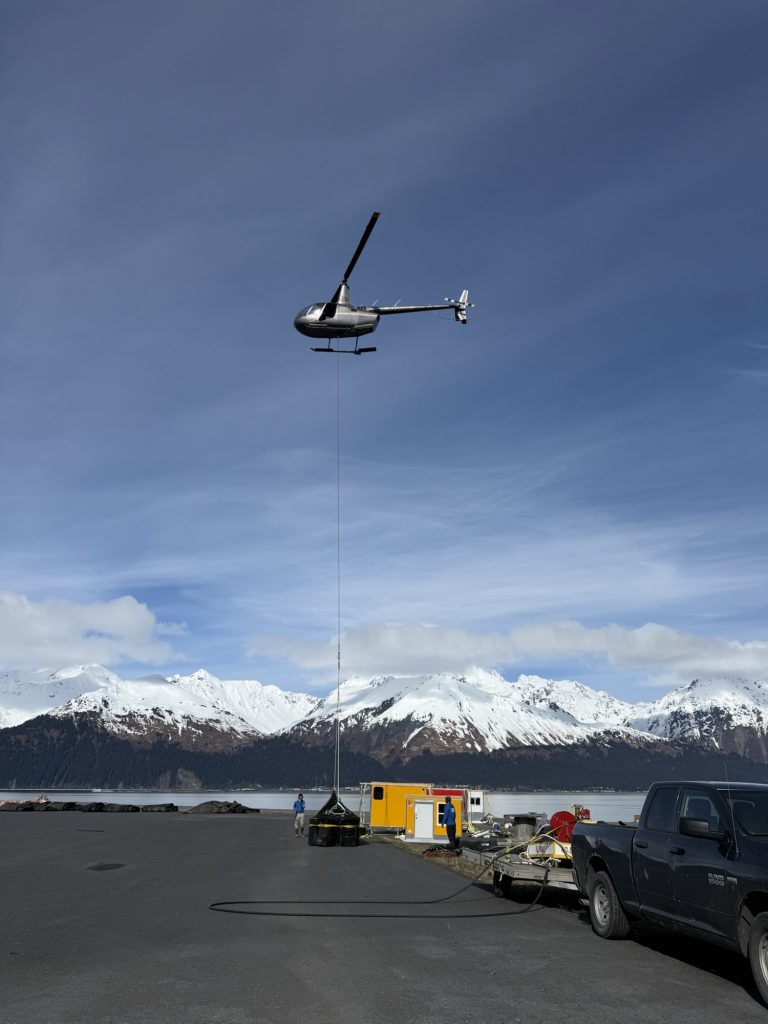
We’ve officially started establishing our dog sledding camp on Godwin Glacier for the 2025 season! Today, we took advantage of beautiful weather and flew load after load up to the glacier using a long line and helicopter. We’re feeling lucky to have several more clear days in the forecast and are getting excited for tours to begin soon.

img 4750
Glacier Camp Setup is Underway! 8

Setting up a remote glacier camp is no small feat — it takes over 15 loads of gear to build out everything we need for the season. From dog sleds to our kitchen and outhouse, everything that makes our camp function is flown up in the spring and brought back down at the end of summer.

img 4752
Glacier Camp Setup is Underway! 9

Today’s setup went smoothly, and we even got the initial dog posts installed. One thing we’re especially proud of at our kennel is how we prioritize our dogs’ well-being. After years of observing and testing, we’ve found that our sled dogs are happiest with wooden dog houses. That means our next big task is assembling all of those houses on the glacier — a labor-intensive job, but totally worth it for our four-legged teammates.

img 9474
Glacier Camp Setup is Underway! 10

We’re incredibly proud of our crew and how everyone has come together to kick off the season strong. Check out our meet the crew section to learn about our team.

Stay tuned — more updates to come!

  • « Go to Previous Page
  • Page 1
  • Page 2
  • Page 3
  • Page 4
  • Interim pages omitted …
  • Page 55
  • Go to Next Page »

Primary Sidebar

Recent Posts

  • How We Approach Conversations About Dog Sledding: What we say, what we don’t, and why it matters
  • How to Attend the Iditarod in Person
  • What Is an Alaskan Husky?
  • How to Qualify for the Iditarod: What it actually takes to earn a spot on the starting line
  • How to Become a Dog Musher: A Realistic Look at Entering the World of Sled Dogs
This error message is only visible to WordPress admins

Error: No feed found.

Please go to the Instagram Feed settings page to create a feed.


Turning Heads Kennel

© 2026 · Turning Heads Kennel . Sitemap

  • Home
  • Tours
  • About Us
  • Contact
  • Shop
  • Support
  • News