• Skip to primary navigation
  • Skip to main content
Turning Heads Kennel

Turning Heads Kennel

Alaska Dog Sledding Tours

  • Home
  • Tours
    • Summer Tours
      • Summer Dog Sled Ride
      • Helicopter Glacier Dog Sledding
      • Flight Seeing 🚁
    • Winter Tours
      • Winter Dog Sledding Tours
  • About Us
    • Our Mushing Philosophy
    • 2025 Crew
    • The Dogs
      • Meet the Dogs
      • Learn About Dog Sledding
      • Adopt A Retired Sled Dog
    • Our Life
      • Travis Beals
      • Sarah Stokey
      • Our Story
      • Racing Schedule
      • Travis Beals Racing History
  • Contact
  • Shop
  • Support
  • News
  • Show Search
Hide Search

Training

How to Become a Dog Musher: A Realistic Look at Entering the World of Sled Dogs

Sarah · April 1, 2026 ·

Dog mushing is often introduced through images—the quiet of a winter trail, a team moving in rhythm, mountains stretching out in every direction. And while those moments are real, they are the result of something much less visible: daily care, repetition, and a long-term commitment to a group of dogs who depend on you.

At its core, mushing is not something you try once and decide to pursue. It is something you grow into. The learning curve is steep, the responsibility is constant, and the work exists long before and long after any run.

For those drawn to it, the path forward is less about acquiring gear or even dogs, and more about understanding what the lifestyle actually requires.

Start by Understanding the Commitment of Owning Sled Dogs

Dog mushing exists on a spectrum—from recreational teams that run a few miles at a time to long-distance racing at the level of the Iditarod Trail Sled Dog Race. What connects all of it is not the distance or speed, but the consistency of care behind the scenes.

Even a small team requires daily attention. Dogs are fed, watered, and monitored regardless of weather. Conditioning happens gradually over months, not days. Equipment needs maintenance. Schedules revolve around the dogs more than anything else.

This is where many people make their first real decision: whether they are interested in the experience of mushing, or in the responsibility that comes with it. The two are inseparable.

Learn Inside a Working Sled Dog Kennel

The most effective way to begin is by stepping into an existing operation and learning from people who are already doing it well.

There is no substitute for time spent in a kennel. It is where you start to understand the rhythm of the work—how dogs are managed day to day, how small details are noticed and addressed early, and how much of mushing happens off the sled.

What often stands out to newcomers is how little of the job is actually running dogs. Most of it is preparation: feeding, cleaning, observing, and making adjustments. It is in these routines that you begin to see the difference between simply owning dogs and truly managing a team.

Dog Care Comes Before Everything Else

Driving a sled is the visible part of mushing. Dog care is the foundation that supports it.

Experienced mushers approach care with a preventative mindset. The goal is not to solve problems after they arise, but to build systems that reduce the likelihood of those problems in the first place. That includes nutrition, hydration, rest cycles, trail maintenance, and a constant awareness of each dog’s physical and mental condition.

Over time, you learn to notice small changes—subtle shifts in movement, attitude, or appetite—that signal something worth paying attention to. This awareness is what allows teams to stay healthy and perform consistently.

If the dogs are not thriving, nothing else matters. If they are, everything else becomes possible.

Building a Dog Team Takes Time

One of the most common misconceptions about mushing is that it begins with acquiring dogs. In reality, it begins with learning how dogs work together.

A team is not just a collection of individuals. It is a system of relationships—leaders, followers, different energy levels, different personalities—and those dynamics evolve over time. What works one season may shift the next as dogs mature and roles change.

Most teams of racing sled dogs are made up of Alaskan Huskies, bred for endurance, attitude, and adaptability. Even within that, no two dogs are the same. Part of becoming a musher is learning how to place dogs in positions where they succeed, and how to adjust when they don’t.

There is no shortcut to this. It is built through repetition, observation, and a willingness to adapt.

The Learning Curve on the Sled

When people picture mushing, they often imagine the moment the sled starts moving. What they don’t see is how much of that moment depends on everything leading up to it.

Learning to drive a sled involves more than memorizing commands. It is about timing, awareness, and decision-making. You are reading terrain, anticipating how your team will respond, and making adjustments in real time.

The commands—“gee,” “haw,” “whoa”—are straightforward. What takes longer is learning how to use them effectively, when to say nothing, and how to let the dogs work.

With experience, the communication becomes quieter and more intuitive. The best teams operate with a level of trust that goes beyond words.

Training Is Built Over Time, Not Intensity

Conditioning a team is a gradual process. Early runs are short and controlled. Distances increase slowly. Strength and endurance are developed over weeks and months, not pushed all at once.

Consistency matters more than intensity. Dogs—and mushers—benefit from a steady progression rather than sporadic effort.

Training is also where the relationship between musher and team is built. It is where expectations become clear, where trust is reinforced, and where you begin to understand what your team is capable of.

The Role of Community

Mushing has always been a community-driven sport. Knowledge is passed down through experience, often informally, and access to that knowledge can shape how quickly you progress.

Being around other mushers—at races, in kennels, or through shared work—provides context that is difficult to gain on your own. You see different approaches, learn from mistakes (both yours and others’), and develop a broader understanding of the sport.

For most people, the path into mushing is not independent. It is built through connection.

Choosing Your Direction

As you gain experience, the path begins to take shape.

Some mushers are drawn to racing, where structure and competition provide a clear framework. Others gravitate toward expedition travel, where the focus is on distance, terrain, and self-sufficiency. Many find a balance between the two.

There is no single correct direction. What matters is that the choice aligns with your goals and how you train your team. You must identify your goals and train your team around those goals. A musher looking to run a trap line is going to train differently than a musher looking to do long distance racing and a musher doing long distance racing is going to train differently than those doing sprint races.

The Financial Reality of Running a Kennel

One aspect of mushing that is often overlooked is the financial commitment required to properly care for a team of sled dogs. Beyond the initial costs of acquiring dogs and equipment, there are ongoing expenses that don’t pause—high-quality food, veterinary care, bedding, transportation, and gear replacement all add up over time. Just as important is preparing for the unexpected. Injuries, illness, extreme weather, or equipment failure can introduce costs quickly and without warning.

Experienced mushers plan for this. They build in margin, knowing that responsible dog care means being able to respond immediately when something isn’t right. Financial stability isn’t about luxury—it’s about ensuring that your dogs receive consistent, high-quality care regardless of circumstances. It’s one of the less visible parts of mushing, but it’s foundational to doing it well.


Final Thoughts: It’s Built Over Years

Becoming a dog musher is not defined by a single milestone. It is built gradually, through daily routines and long-term commitment.

The work is repetitive. The learning is ongoing. The responsibility does not turn off.

But over time, something else develops alongside it—a level of understanding between you and your dogs that is difficult to describe until you experience it. Movement becomes more fluid. Communication becomes quieter. The work, while still demanding, begins to feel natural.

For those who stay with it, mushing becomes less about the act of running dogs and more about the relationship that makes it possible.

It is not a quick path, but it is a meaningful one.

Steaming Ahead

Sarah · January 31, 2016 ·

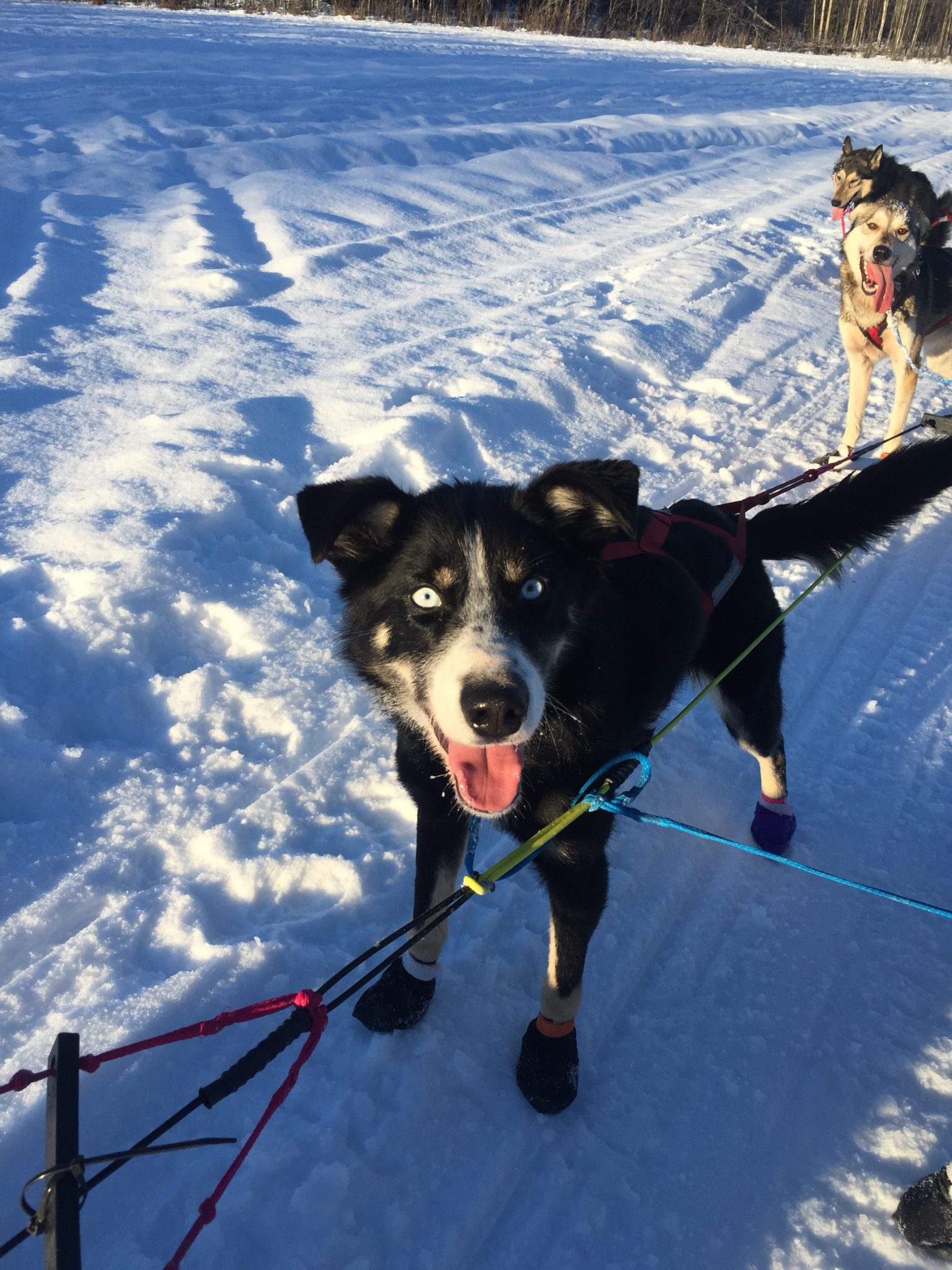
It’s been warm out lately. These late January runs feel like the beginning of April and I often leave the yard without my parka. We stop often, to eat snow and roll around it. I enjoy the silly eccentricities of my dogs during our pauses, each with their own quirk, and they relish the attention I give them. Crazy in particular loves to roll around in the snow and though she is not alone in doing this, the joy she gets can be surpassed by none.

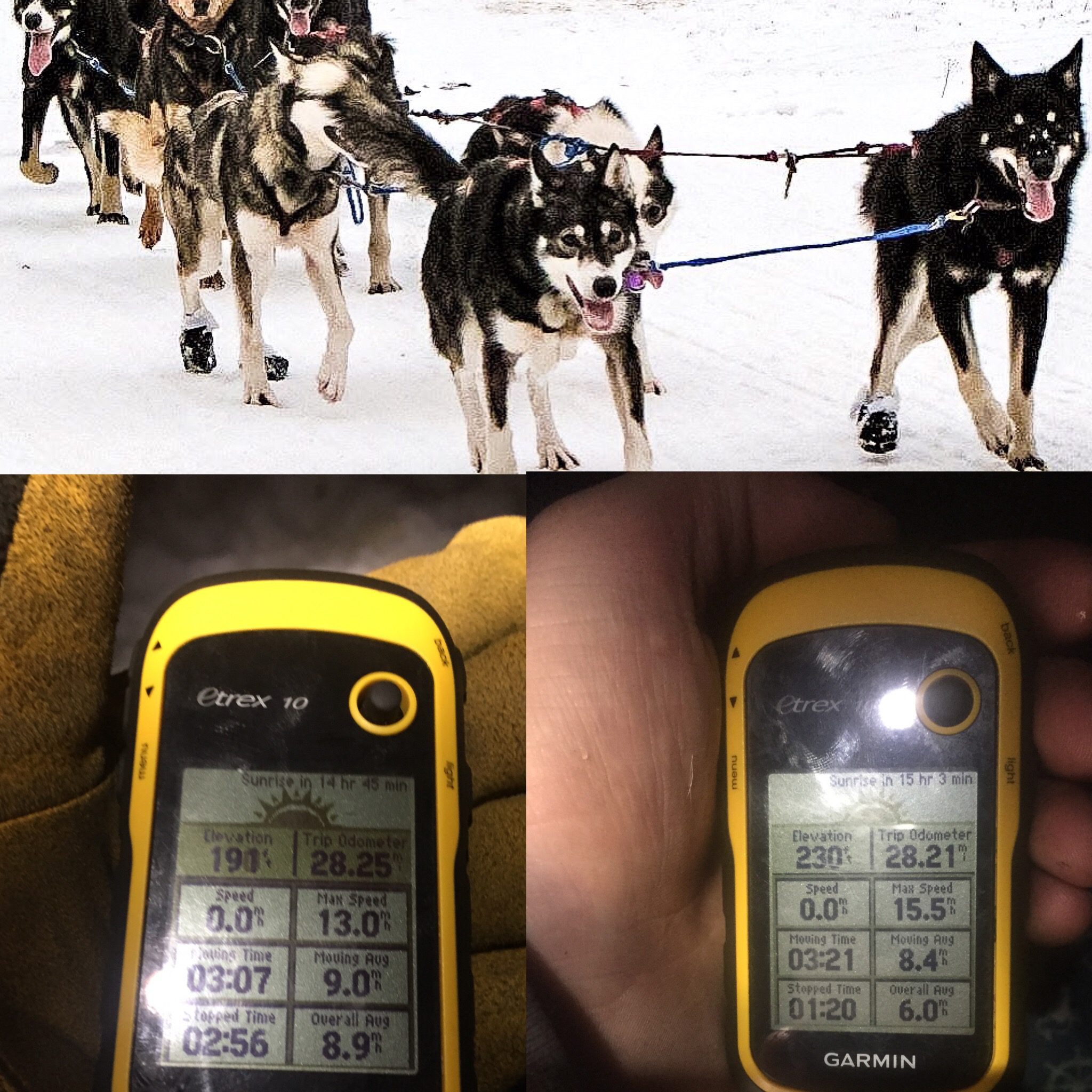
When we leave on runs its all I can do to keep the team slowed and moving at a steady pace. I’ve learned that the only way to trust my speed is by looking at my GPS so I’ve grown accustom to looking at it. I’m sure it will be glued to my palm the first few days of Iditarod. I’ve been running shorter since the northern lights 300 but need to go longer now. The dogs leave on our runs too energized and comeback unphased. More camping is in store in the days and weeks to come.
 IMG 6644 
Today, the weather was glorious and it was amazing to be out on the trail. Although we moved well, when I stopped the team we would get tangled. I’m working with a young dog up front who doesn’t know his responsibilities as a leader yet. More than once I could be heard cursing as I ran up to get him lined back out. The lightbulb hasn’t click yet – He doesn’t get what I am asking – so it’s been a painstaking exercise in patience and praise.

For me, sometimes I think I learn the most when things don’t go smoothly. Today we made so many wrong turns because I had no idea where we were and so the dogs and I had to work through those consequences. Although my leaders struggled with lining out, they were pretty spot on when it came to their directional commands. We turned around in parking lots. We made arching loops on the river. We cursed at my stupidity — how many times could I get is lost?

 IMG 6650 
We mostly had fun. The dogs wagged their tails and barked with excitement when we stopped. I enjoyed the weather, the performance of my team, and the serenity of the trail. And even when I was untangling my leaders for the umpteenth time I knew that I was learning as a musher and was trying (my best) to impart a little wisdom on my young leaders. Plus, it was better to find all this out now than on Iditarod!
Slowly Preparing for the 2016 Iditarod

Sarah · January 30, 2016 ·

I’ve been starting to work on drop bags. The easy parts. Packaging granola bars and Capri suns. I eat like an NFL defensive lineman when I’m out on the trail so outfitting me with food is no small task. Fortunately, both Travis and myself are well supported by our town of Seward. Dan and Madeleine Walker lead the team of Sewardites in cooking us trail meals. They coordinate donations and then go out of their way to make sure everything is vaccumed sealed. It is one of the most unique and helpful ways the Walkers have chosen to sponsor us — it frees up a tremendous amount of time not worrying about it.

In the next week, I’ll start working on packaging hand warmers, gloves, extra hats, and neck gaiters as well as extra sets of clothes to send out. It is so relieving and refreshing to put on a new pair of clothes out on the trail. I’m sad though because I only have one set of my favorite pair of long underwear. I’m seriously considering buying a second set!

The dogs have been doing great. Today I left with a 14 dog team and quickly tipped the sled and skidded for a ways before jamming in my snow hook. For a moment, I thought it was all over. I banged my wrist pretty badly and immediately thought the worst. I quickly realized I was over reacting and that I was just fine. I guess my nerves are starting to get me! But boy, does this team have power. I was on my brake for the entire run. They were wired. 

I really had a great run with the team. After I got back, Travis and I compared field notes – also known as photos of our GPS and were amazed to see that we’d gone practically the same mileage despite not talking to one another, training out of different areas and running on seperate trails. 


IMG 6618  
At night, I’ve been trying to be productive – by packaging up things for food drops or doing other things to prepare me for the ‘big’ day. I should have made necklines tonight or worked on my toggles for my gangline. Instead I binged on Law and Order SVU and relaxed by doing some art. I can never get enough of Oliva Bensen, so much that I even named a dog after her ( a boy) who is currently on my team. I wanted to name a whole litter after SVU characters but that got the vetoed. I’m sure I’ll have another opportunity!

Anyways, it’s late and I have all the work I didn’t do – toggles, labeling drop bags, running again – to do tomorrow. Things are sneaking up fast!

I am excited because my sister confirmed last week her plane tickets and I just got an email from my brother with his plane ticket. My whole family, minus my amazing brother in law and my two adorable nephews, will be at the starting line to send me off on my way to Nome! I am beyond thrilled!

Happy trails,

Sarah

Back at it

Sarah · January 18, 2016 ·

The cold has returned and with it the trails. I’m still working on my 2016 Copper basin 300 story but I thought I would still share the going ons that occur  day to day.

It’s been strange reemerging myself in cabin routine. We took a break from running dogs to recoup and recover. I visited friends in Anchorage, I gave the dogs lots of rubdowns, and mostly have tried to sort out all that is left to do between now and Iditarod. There’s still so much to do. So much training, so much packing, so much for preparing that at times the thought of it can be overwhelming.

On any given day, it seems as though the easiest thing to do is simply run dogs. Ignore the world. Ignore the phone. And in some instances, ignore the people.

To be honest, the last week has been hard. Racing was such an easy, wonderful distraction. There’s nothing quite like being out on the trail with your dogs from mile after mile after mile. Knowing that you don’t have anything to worry about, except the next time that you were going to stop and rest.

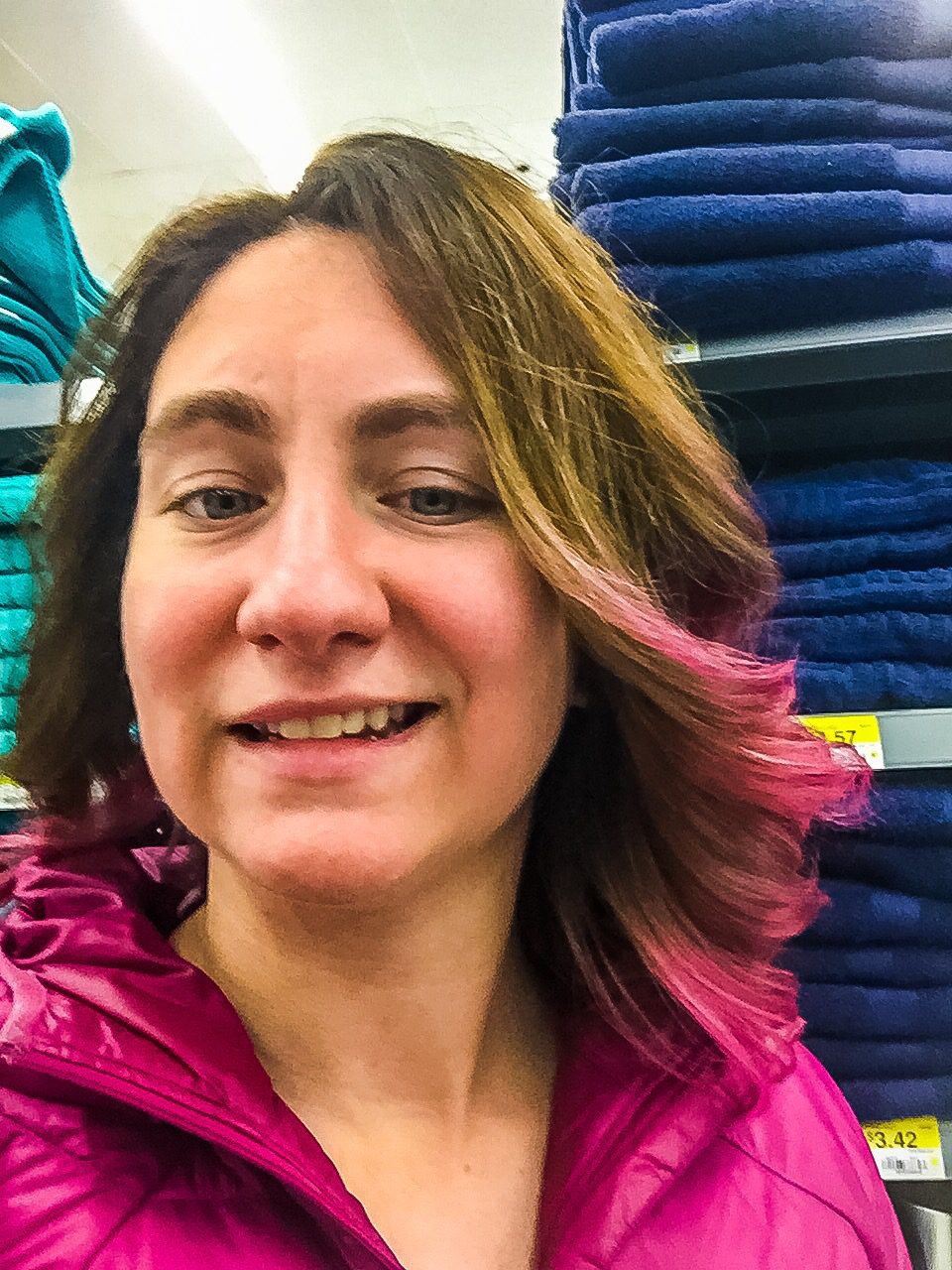
In Anchorage, I took good care of myself. I leisured in the joy of running water and electricity. Working for rent late to start updating my blog. I wrote three posts, one on my team, one on Wyatts team, and one on Justin’s team. It was fun, but telling the true tale is what I look forward to most. That part, is still coming along slow. Hi showered and hot tub I let my sore muscles relax. I got a haircut and died my hair pink. Something I had been wanting to do for months and finally, did.

So much of who we are is wrapped up in how we look. I don’t know if a tiger can change it’s stripes, but I can sure try!


Sarah Stokey after having her hair done in Anchorage after the 2016 Copper basin 300
 
We enjoyed the company of friends. And I enjoyed the fact that I could clean the cabin, and get reorganized. Today I went out with the dogs. I was so happy to see how well they did. The sugary conditions of the Copper basin we’re so different then the trails we’ve been training on.it was nice to see how well my team bounce back. They look better than they ever have today.


Sarah Stokey and her dog team training for the 2016 Iditarod
 
I love this time a year. I love the way we gain light. The soft pale blue greens that fill the skyline and the muted yellows. Today, was one of the first times I hoped up and ran my entire run during the daylight. It was fun. I enjoyed watching Denali as I weaved through the swamps. At one point, I took a trail I didn’t now. My headlamp that I had packed was pretty dead in terms of batteries so I ended up calling the dogs Gee off the trail we were on and across the swamp. We forged our own trail, Using the mountains and the powerlines as reference points. I was so impressed with how spot on my leaders were.

With the swamps as icy as they were, we could travel practically anywhere. The idea of following a set Trail was somewhat ridiculous because everything was hard and fast. After the soft snow of the  2016 Copper basin 300, my sled dogs seemed to enjoy the challenge of going off trail.


Sarah Stokey right before taking off with the 14 dog sled dog team in Willow Alaska
 
It really was a magnificent run. I followed the sunset home and chase the last the daylight. It was my first run wearing a new helmet and goggles my mother had sent me. I felt a little ridiculous, because not a lot of people wear helmets in the sport. I have to admit though, I forgot how warm wearing a helmet was. I enjoyed the goggles immensely because the last run I’ve gone out on that was this cold, I started having problems with my eyes getting too cold. I read about Brenda Mackey in the kusko 300 and I’ve decided that I better get used to mushing with goggles. The one time I froze my eyes was brief, but immensely painful. I can’t even begin to imagine the pain of frostbite.

I got back to find that the oil stove went out. I’m sitting in the cabin now, using my headlamp for a light, and waiting for the cabin to fill back up with heat. My hands and toes are so numb that I may as well be back out mushing. Six dogs keep me company in the cabin. Lying on my feet or on my chest as well as three cats who mostly stay upstairs but have now wandered down to try and find a little bit of warmth.normally, the cabin would be warmer. But I was gone for several hours and I left the windows open so that the dogs would not overheat. The stove must’ve gone out shortly before I left while I was outside still hooking up. I have it on and running now but it certainly is not at full blast.

As I do whenever I face something that is less than ideal, I remind myself that this will toughen me up for Iditarod. 

Well, I guess that’s it for now. I want to get back to working on my Copper basin 300 right up. I haven’t gotten very far. I suppose that’s mostly because I’ve gone into such excruciating detail so far. I hope it will be a good post. For now, happy trails!

Mushing Home – Part 3 of the Denali Highway Trip

Sarah · January 2, 2016 ·

This is the 3rd and final installment on a series of posts describing my 165 mile training trip o  the Denali highway with fellow Iditarod musher, Wade Marrs. You can read part 1 and part 2 first but do not need to in order to enjoy this post.

It was hard to leave the warm hospitality of Alpine a Creek Lodge. They fed us some delicious biscuits and gravy and a few hours later some pasta and an Amazon salmon spread with crackers. I sat next to the wood stove and wrote about our adventure out and chit-chatted with the kind hearted snow machiners that had fed us breakfast the day before.

I’ll be the first to admit that I wasn’t exactly motivated to be on a fast schedule out of there. My dogs were a little tired and I had two that were sore. We planned on running the 65 miles straight back to the truck. My dogs longest run up to that point had been 50 miles. Mostly we’d been running 30s and 40s and doing lots of camping. I didn’t want to ask more of them at the end of the trip, knowing that we would be heading out into some gnarly winds, then necessary.

 IMG 6083 
So I wrote my blog, ate lunch, watered dogs, and slowly got ready. I had a few repairs to do on my sled. One of snow hook lines had snapped on the previous run. Snow hooks serve as our anchors when we stop the team. I’d put on a spare rope I’d had in my sled that was close to the right length but was a few feet too long. I knew this at the time but I had one hook that worked great so if my back-up hook wasn’t perfect then quiet frankly whatever. If it became an issue, I knew I could always tip my sled over. 

 So Before we left I fixed my line and made careful to make it the right length. Too short or too long makes it difficult to stand on your sled while you pull it out of the snow. Not impossible to get around, but an annoyance I didn’t want to have to deal with.

 IMG 6086 
I slowly put booties on my dogs, having to unravel each dog out of their tight Coul before doing so. I stood them up for a few second, put their booties on, and then they curled back up to hide from the wind. Normally when I booty a dog I have the booty I am going to put on in my hand and the others on the ground. That didn’t exactly work with all the wind so I held what I wasn’t using in one hand while bootying. After having tried this, it was so much more efficient than what I had been doing and I’m surprised at how long it took me to adopt something so simple.

Before we took off, I filled my cooler with water and kibble to make a wet meal for the dogs. Hydration is so important and windy conditions often cause more water loss so having a quick wetsnack really helps with their overall hydration.

The mush back was mostly uneventful. At one point you go around a wide sweeping hill. When you look at the edge of the road you can see the tops of trees down far below its edge. I don’t think I realized how much I hated heights until, in my sleep deprived state, I felt as though we were getting closer and closer and oh my god closer to the edge. Of course, we were fine. I’ve learned through racing and other mushing trips that the more tired you become the more things become mind-over-matter. So instead of worry about something that had a 99.9% chance of getting swept off the road, I focused on the beautiful dog butts in front of me.

 IMG 6087 
Wade waited for me at the bottom and we crossed a long bridge that spanned the Susitna river together. His team, older, more experienced and more miled up than my own, took off at an impressive clip in a fast steady trot. My team, with 7 dogs who this was their first season running, couldn’t keep up but I knew that asking them to was unrealistic. He had a seasoned veteran team. I had babies. Asking my dogs to keep up after going 100 miles with them would be like asking a T-ball team to go out and play a game against the Red Sox. So we travelled slower, but not much.

It was warm out for most of the run. At times I took my gloves off because I was too hot. At other times, my parka was wrapped tight around my face in an effort to prevent the wind from getting at me. When the wind came, my team would blow from one side of the road to the other. I couldn’t help but think it was like the wind we playing ping pong with us. 

 IMG 6090 0 
These heavy wind conditions only lasted a few miles but I was so happy with how Penny did leading. She drove into the wind and kept the team on track. Last year, she spent the winter skijoring with our friend Meret so this is her first full season mushing. She is going to be just like her mother, Fidget – an absolute super-star. At times the trail was soft and blown in and others it was hard and fast. The dogs and I enjoyed it all.

Halfway through the run, I started feeling how tired I was. The day we left for the highway, I’d only gotten about 5 hours of sleep the night before. That night (Wednesday), when we were supposed to be mushing, we ended up digging out the truck and getting unstuck. (If you haven’t, you can read about that in part 1.) Because of how long that took, we only got 3 hours of sleep. We took off and spent most of Thursday on the trail, arriving at Alpine Creek Lodge around 6:30am. Once settled in we slept for about 3 hours and then ate breakfast at the lodge, I wrote my second blog post, and we hung out with snow machiners. By the time we got back to the truck around 11:45pm, I had slept a grand total of 11 hours since that Tuesday or to put in better perspective during a 96 hour period I had only slept 11 hours.

Going down the trail, my fatigue began to hit me. The night before I had suffered from minor hallucinations — as my mind morphed pine trees into cabins, oil tanks, animals, and farm silos. I’d snapped back awake eventually but it was hard and took some serious effort. Mind over matter is infinitely harder when your mind is worn-out. But I preserved.

On this run, I decide that the best way to stay awake was to sing. Sure, watching my dogs was important, but my mind needed something more active to keep itself going. I belted out Adele for all the moose and caribou to hear. Apparently, they didn’t think much of my singing because they stayed off the trail. Good.

I did see a rabbit and  a common murre. These are ocean dwelling birds that have blown inland due to strange weather patterns. They can’t survive away from he water so if you see one you are supposed to catch it. I stopped my team and went to pick it up but it was warm out and I didn’t have gloves on. I took one look at its long beak and, quite frankly, it’s grumpy attitude and rifled through my sled to pt some on. When I got my gloves on it had already taken off and was no longer on the trail. 

One of the rules of dog mushing is to be very careful about walking away from your sled. If your team pulls your hook, they could take off and leave you in the dust. But my dogs had run a long way so I set both my hooks and decided that the life of this little bird was worth it. As soon as I stepped off the trail, I sunk up to my belly button. The bird darted further into the woods. So that was the end of that. 

I felt bad leaving it behind, knowing it would most likely die, but wih a full string of 16 dogs in front of me who were now ready to run wallowing in waist deep snow to chase a pissed off bird seemed like a moronic idea.

So down the trail we continued. It seemed like no matter how far we travelled though, the truck wasn’t getting any closer. Time, it seemed, was moving excruciatingly slow. But the miles came and went. We passed a few teams who were just starting their runs.

 IMG 6084 
At one point we passed the mythical parking lot where more trucks were, miraculously, more trucks and an enclosed trailer were parked. You’ve got to be freaking kidding me. I thought to myself. How the heck did they make it through those wind berms? Seeing the four trucks and trailer there made me laugh. Apparently it was just Wade and I who had all the back luck.

The one thing that can be tough about the highway is the mile markers. I couldn’t remember what mile we were parked at. I watched them slowly tick by: 116, 117, 118… On and on and on.

Finally, at mile 130 we made it to the truck. We loaded dogs and sleds and gear, prayed the truck would work, and miraculously left.

But we didn’t make it far. I had warned Wade that I was absolutely exhausted. I would do my best to talk to him and help him stay awake while he drove but not to judge me by what came out of my mouth.

We’d been in the car for about a half hour chatting and driving when I stopped making sense. We were talking about how fun the trip was when I launched into a tangent about how it was just as good as the movie.

“What movie?” Wade asked, slightly confused.

“Jurassic Park.”

“Oh.” There was a long silence. “Weren’t we talking about dog mushing?”

“I really liked Jurassic world.”

At this point, we realized that we both needed to sleep, found a pull off, and passed out in the truck for almost 7 hours. You have to be tired to sleep in a truck for that long because that is not a position humans are designed to sleep in. Wade got driving at some point and I continued to nonsensically mutter responses. At one point Wade was on the phone but I still had my eyes closed and responded  to everything he said.

Then, out of nowhere, I popped up and said, as if it were perfectly normal, “ok my brain just reset. I’m good to go.”

And for the rest of the ride, I was. Now that my dogs are put away and this final installment has been written, I am going to go pass out.

  • Page 1
  • Page 2
  • Page 3
  • Page 4
  • Go to Next Page »

Turning Heads Kennel

© 2026 · Turning Heads Kennel . Sitemap

  • Home
  • Tours
  • About Us
  • Contact
  • Shop
  • Support
  • News