• Skip to primary navigation
  • Skip to main content
Turning Heads Kennel

Turning Heads Kennel

Alaska Dog Sledding Tours

  • Home
  • Tours
    • Summer Tours
      • Summer Dog Sled Ride
      • Helicopter Glacier Dog Sledding
      • Flight Seeing 🚁
    • Winter Tours
      • Winter Dog Sledding Tours
  • About Us
    • Our Mushing Philosophy
    • 2025 Crew
    • The Dogs
      • Meet the Dogs
      • Learn About Dog Sledding
      • Adopt A Retired Sled Dog
    • Our Life
      • Travis Beals
      • Sarah Stokey
      • Our Story
      • Racing Schedule
      • Travis Beals Racing History
  • Contact
  • Shop
  • Support
  • News
  • Show Search
Hide Search

Dog Sledding Basics

Letting Hair Fly: Why We Chose to Groom Our Sled Dogs

Sarah · May 22, 2015 ·

This year we decided to have our entire kennel of sled dogs groomed. This is something we have never done before and something we absolutely loved. Amber Travis of Bully & Bug Grooming, a local dog groomer here in Seward, Alaska came out to our kennel to help us tackle the enormous project of grooming our dogs.

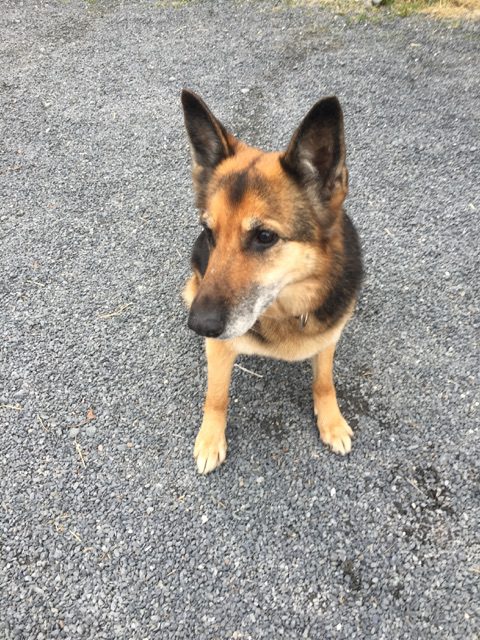
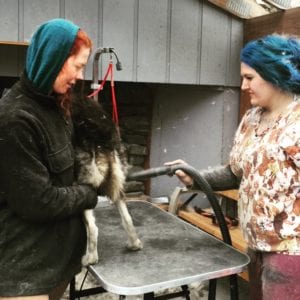
Betty after being groomed We first decided to have our kennel groomed after we took our older german shepherd, Betty, in to see Amber. I was sick of finding Betty’s hair everywhere as she was heavily shedding and she looked like a hot mess. Betty, however, did not enjoy me brushing her and, running two businesses, I had very little time that I could dedicate to the project. Upon advise from friends, I called Amber up and we set a date. Betty went in to Amber’s grooming facility and emerged nearly 4 hours later sleek and gorgeous. Her thick undercoat was entirely gone. Jasmine and Amber help blow out a sled dog

Amber had special combs and blow out tools that she used to help get rid of the fur Betty was trying to shed. We talked and after thinking about it for a few days I decided that this was something I wanted to do for our sled dogs.

Why Groom Sled Dogs?

Most mushers would say that they don’t groom their sled dogs and that they rarely give their dogs baths. We, however, decided that grooming our dogs would be beneficial for several important reasons:

  1. Our dogs work hard and they deserve to be pampered.
  2. Getting rid of their heavy undercoat would help them run tours in the warm summer temperatures.
  3. When dogs have problems shedding their coat in can lead to skin irritation and infection; by having their coats blown out we avoid this problem all together.

When we looked at these reasons, we decided that they really aligned with our kennel’s mission to provide consistently excellent dog care. We were also able to help another local business which, in our book, is always a great thing to do. We can help be a part of our local community by hosting events like Paint-A-Palooza and we can also be a part of our local community by supporting local businesses, such as Amber’s.

bully-and-bug-dog-grooming-seward-alaska

Looking back, I can’t believe we hadn’t done something like this before because it really has significantly impacted our dogs overall well being. Not only did they (mostly) enjoy being blown and brushed out, they are also now much more comfortable as temperatures continue to climb as we enter the warm summer months.

Here is a short video of the dogs being groomed:

[su_youtube url=”https://www.youtube.com/watch?v=AKJ1vV2VTWc&feature=youtu.be”]

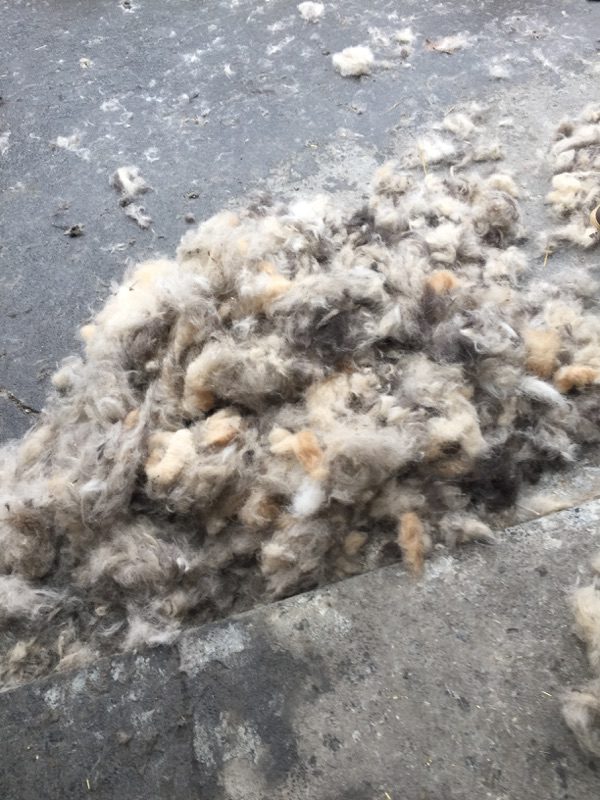
The Hair of 40 Sled Dogs
Just some of the hair of 40 sled dogs

Because our dogs do tours, they will retain less of their body heat and will be better at keeping themselves cool. It also significantly impacts the dogs who will go up on Godwin Glacier for the summer as by blowing them out, they will now shed significantly less on the glacier meaning our crew will have less work. Believe it or not, we have to rake up dog hair on the glacier all summer long!

We are really happy with our decision to have our dogs groomed and will be looking forward to letting their  hair fly again next year!


How Summer Dog Sled Tours Help Us As A Competitive Racing Kennel

Sarah · May 20, 2015 ·

Racing season may be over but it doesn’t mean we stop training. For an athlete, the journey to better yourself and your team is never ending. How can we improve? What can we build upon? What do we need to do to continue our success? These are the questions that pour into our conversation at morning coffee.

Most importantly, what can we be doing right now to help us later on in the season?

Even though the snow has melted, our dogs still need to exercise. Exercise is a crucial part of any healthy lifestyle. When your job is to compete in 1,000 mile races staying in shape is a critical job requirement. Although the length of our sled dog runs may shorten due to the warming temperatures, it is important that our dogs still have an outlet for their endless energy. Running is required!


Lots Of Visitors Means Lots of Opportunity for Dog Sled Tours

During the summer, Alaska comes to life as visitors from all over the world flock to see our state’s majestic scenery and experience our unique Alaskan culture. Dogsledding is such a unique part of Alaskan culture that people can’t help but be interested. Before we started doing dog sled tours, curious visitors would pull in to our driveway at all hours of the day.

We’d happily great them, thinking they were lost, but they weren’t lost.

“Can we check out your sled dogs?” People would stop in asking, again and again.

Eventually our need to run our dogs, our passion for sharing our sport, and the curiosity of people passing by our kennel made doing dog sled tours an easy choice for us.

On a daily basis, we get to share our passion.

“I had no idea how much they loved to run!”

“I am amazed at how smart your dogs are.”

“They are so excited.”

Guests on our summer dog sled tour help us socialize our young puppies

We get so much positive feedback from people who are curious because dogsledding is something so foreign to them. By the end of our tour, many of our guests are hooked and continue to follow us along throughout the racing season – some of you may even be reading this blog post!

Time and again people are amazed at how much our dogs love their job. To a sled dog running isn’t work — it is a way of life. For a musher, running dogs isn’t work either. It’s a way to decompress and get away from the hectic chaos that defines most modern lives. When we are out on the trail, we must be one hundred percent focus on our dogs.

Our tours have now evolved into a crucial part of our training program. Just as collegiate and professional athletes train during the “off season” so do our sled dogs. When you go on one of our dog sled tours, you are not simply going for a dog sled ride. Our tour is about experiencing training in action. It’s about sharing not only what we love but about educating people on how sled dogs our trained.

The summer dog sled ride we give at our kennel incorporates two crucial components to help us maintain a competitive edge throughout the racing season. First, instead of simply running our dogs we are actually putting them through a strength training program. Second, we use each tour as an opportunity to work on training a new lead dog.


Dog Sled Tours As Strength Training

Running dogs in the warm summer months is inherently different than running in the winter. Careful considerations have to be made about how to best run the dogs and how to accommodate them to the warmer temperatures that summer brings. We are particularly lucky because our kennel is situated in a glacier valley and we often have cold wind that blows down off the Harding Icefield that helps keep our dogs cool. Additionally, we take precautions by resting our dogs frequently and giving them plenty of access to fresh water before, after, and even during our tours.

Because of the warm conditions, we generally run the dogs between 1 and 2 miles. We are fortunate that our trail system allows us to customize the length of our runs based on the weather so we can adjust how far we run them based on what is best for the dogs. On warm days, we run shorter than on cool rainy days.

Alaska Dog Sledding -- Summer Style -- with Turning Heads Kennel

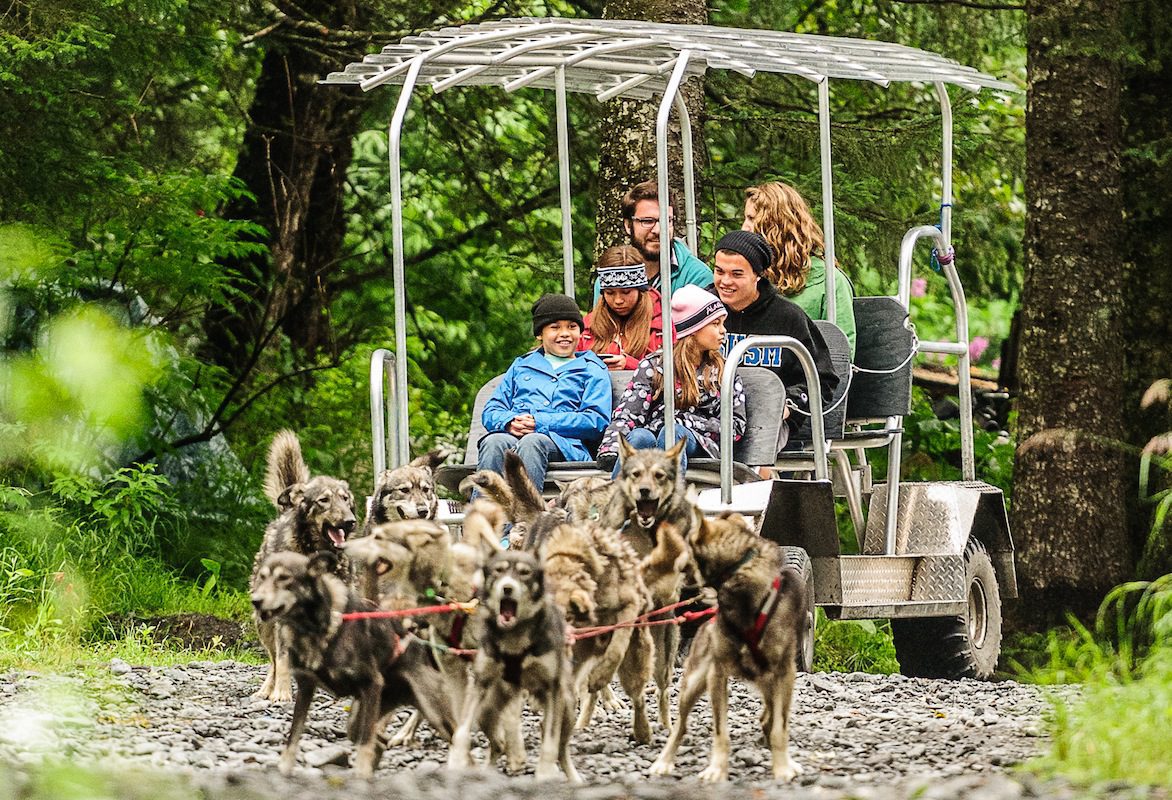
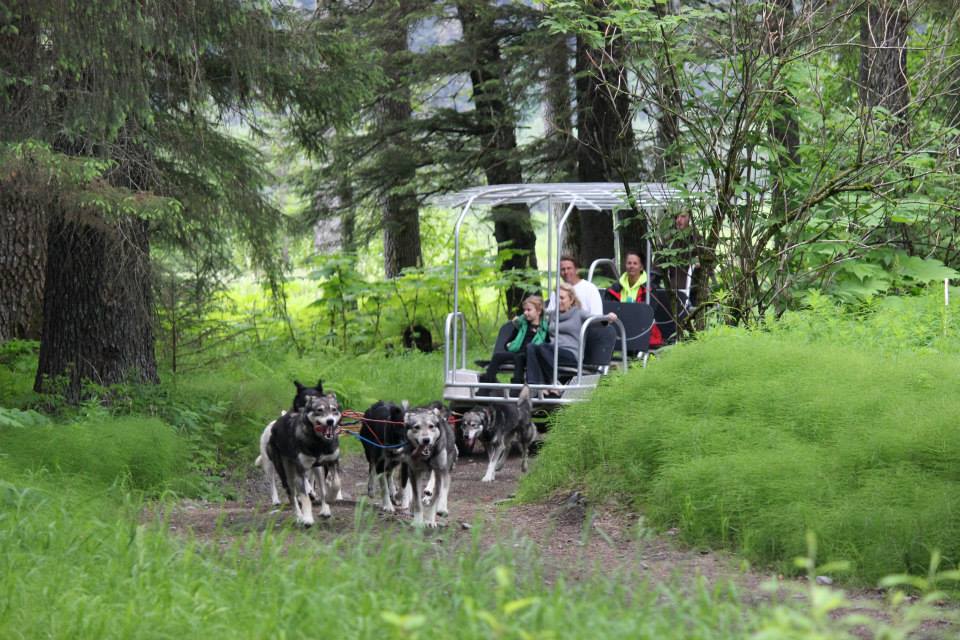
We use an aluminum cart that weighs about 800 lbs without passengers and can seat 8 for our summer time mushing. Unlike some of the bigger dog sledding operations, we generally have between 4 and 8 guests per tour. This roughly equates to an additional weight of 600 to 1200 pounds that the dogs are pulling. So on average when we go out with our team they are pulling anywhere from 1200 to 2400 pounds.

We use this information to build a great strength work out for our dogs. At the start of the summer our dogs have generally had close to a month and a half of very light easy runs. They are no longer on the aggressive training schedule required for racing because that is over so we carefully work them into their new routine.

When the summer season begins, we generally hook up 14 to 16 dogs based on the size of the tour and rotate our dogs out after every run. That means the dogs run once and, if we have another tour, a completely different team is then hooked up. As the summer progresses however, we begin making changes so that the work outs continue to challenge our dogs.

Generally speaking, the weather in Seward caters to us strengthening our team. We generally see more temperate weather in the early part of the summer and we see more rain in the latter half. The latter part of July and August can bring wet, cool, and damp weather – which allows us to run our dogs longer and harder. As we enter the cooler and rainier stretch of summer, we take advantage of it.

During the middle of the summer, our will adjust to pulling heavy loads. We can’t up the weight but we can increase the number of reps our dogs do so when the weather is sufficiently cool we may “camp” our dogs in between tours. Camping refers to the practice of leaving the dogs hooked up but resting on the line so that they are ready to run again. This is commonly done in checkpoints and during races.

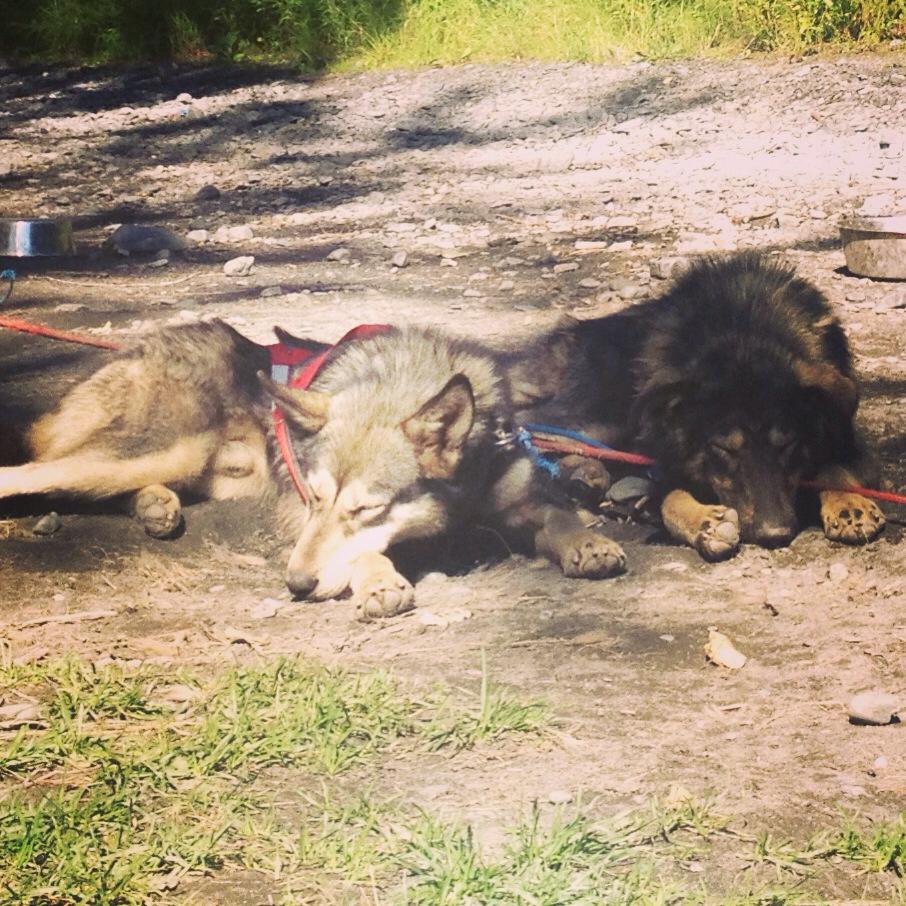
Young dogs learn to camp inbetween dog sled tours
Young dogs, Wrangler and Carhartt, learn to camp inbetween dog sled tours. Wrangler finished 11th and Carhartt 10th in the 2015 Iditarod.

Camping the dogs allows us to spend less time hooking dogs up and more time interacting with our guests. It also starts teaching our dogs the basics of racing: first you run, then you rest, then you run some more.

Finally, towards the end of the season we may even start to use fewer dogs. The number of tours we do each day significantly decreases towards the end of August and at this point our dogs are officially body builders so instead of hooking up 14 dogs we may only hook up 10 or 12, depending on the number of guests we have.

This great strength training program helps our dogs stay in shape throughout the summer and ensures that every dog is ready to begin working on building their endurance come the fall.


Lead Dog Training Is The Best Part Of Our Dog Sled Tour

The tours we do in the summer don’t just serve as weight training. They are a vital component to our lead dog training program. This year, we realized how special our kennel is because of the number of high quality leaders we have. This is a direct result of the emphasis we place on making our tours a training exercise for our guests to be a part of rather than simply a ride.

It is very easy to hook up well-trained leaders to make your runs go smoothly. It’s much more difficult to take dogs who have never run lead and work with them up front while communicating with guests. That, however, is what we have chosen to do. We don’t stick with our go-to race leaders, instead we focus on building new leaders. This gives our kennel tremendous depth.

The first step involves identifying potential leaders. This is generally easy as we already know the dogs. Each spring we identify about a dozen dogs in our kennel that we think could possibly run lead. Then, we make a goal of trying to get those dogs in lead as much as possible. We challenge ourselves, we challenge our dogs, and we keep our guests thoroughly entertained because seeing a lead dog develop is truly exciting.

Every other dog sled tour we have ever seen in the summer time has a set course that they operate on. The dogs (and even sometimes the musher) eventually go into “autopilot.” The dogs aren’t taking commands, they are simply going through the motions. This is not good training and, in our mind, is actually un-training the dogs.

So we don’t have a set course.

We have a system of trails and each time we go out for a tour we never know exactly where we will go. Sometimes commands are called at the very last second and guests are awed by how our leaders quickly take the command or sometimes they watch as we patiently work with our dogs until they correctly figure out what we are asking.

To effectively train lead dogs over a short 1 or 2 mile run requires having multiple intersections so that the dogs can constantly be tested with their commands. Throughout our tours the lead dog or pair of lead dogs need to take, on average, about a dozen different commands. The commands we use are “gee” for right, “haw” for left and, occasionally, we use “straight ahead” to tell the dogs that they are to continue down the trail without turning.

When we start a new dog off in lead, we generally partner it with a more experienced leader. Zema is one of our go to dogs for partnering new potential leaders. She know her commands better, I think, than most people know their right and left. She turns on a dime and having her up front means you can go anywhere you want. She is the ideal tutor for our younger dogs.

When we start training a new young dog up front we hook them up with Zema and Zema (or another well-trained lead dog) shows them the ropes. This usually lasts 1 or 2 weeks. After that, we start hooking up the young dog on their own in single-lead or with another young leader who has been running up front but still hasn’t “mastered” the commands.

That’s when the magic happens.

We start giving commands and we can see how much our dogs have or haven’t absorbed from their previous times up front. Instead of relying on the wisdom of the older dog, the new young pup must now rely on their own intelligence. Sometimes, the new leader gets the commands right from the beginning but that is very rare.

Instead, they make mistakes. We stop. We work with them. Honestly, after doing this for three years, I think our visitors actually enjoy seeing the dogs mess up because they then get to see how we work with the dog to get it to make the correct decision.

Training a lead dog is actually a very simply process if you own high caliber dogs and know what you are doing. A sled dog wants to run. To train a lead dog we simply must channel this desire.

When we approach an intersection we will call a command such as “Gee!” to that the leader will go to the right. If the leader goes to the right nothing happens; the dogs got the command right and the reward is that they get to keep running. If, however, we call out “gee” and the dogs get the command wrong, we suddenly stop the team.

A good sled dog does not like being stopped. If we are giving a command, our leader knows it is supposed to be doing something but perhaps it does not know what. The connection between the word and action has not yet solidified so the dog will make guesses. We repeat the command “gee” and when the dog tries to go to the right we say “yes! Gee! Gee! Gee!” release the brake, and the team can continue to go.

It’s really magical watching this process happen and some very lucky guests got to be part of this last year as we worked and refined many leaders. Last year, we made Fidget a leader through our summer tours. This year, we reaped the reward from that effort in Iditarod. When several of our leaders became injured right before the race, Fidget really had to step up her A-game. She led 700 miles of Iditarod either in single lead or with a partner. She was able to do this because we invested time in training her to run up front during our summer tours.

Fidget running single lead during Iditarod 2015

Running sled dog tours during the summer has helped us build a competitive kennel with a tremendous amount of depth. After the summer season is over the new leaders we have built spent much of fall training running up front on the open river bed in front of our house as a kind of “final” exam. Out on the river bed, there is no trail to follow and the wind can often reach 30 or 40mph. Amazingly, our dogs seem to have no trouble.

We love getting to share our passion with guests and inviting them to be with us as we train future champions.

Everything You Need To Know About Alaska Dog Sled Tours

Sarah · May 6, 2015 ·

Everything You

No trip to Alaska is complete without booking an Alaska dog sled tour. Dog  sledding is the apex of Alaskan Culture. A trip to Alaska that doesn’t include visiting a sled dog kennel or going for a dog sled tour would be like visiting Paris and skipping the Eiffel Tower – you just don’t do it.

But trying to figure out where to go dogsledding in Alaska can be really challenging, especially given how large Alaska is and how many dog sledding tours there to choose from. Although there are dozens of companies that offer dog sledding in Alaska, in the end, there are really three main types of dog sled tours you can choose from in the summer: a kennel tour and demonstration, a summer dog sled ride, and a glacier dog sledding tour.

A kennel tour and demonstration allows visitors the opportunity to visit a sled dog kennel and watch demonstrations of the sled dogs running. A summer dog sled ride consists of being on a wheeled sled that the dogs pull over dirt. A glacier dog sled tour requires flying in a helicopter up to high elevations where there is snow; this is generally what people imagine to be a dog sled tour but it comes with a hefty price tag.

Dog Sled Tour Availability Is Greatly Influenced By Location

It’s important to understand that although there are dog sled tours throughout Alaska, location plays the biggest factor in what type of dog sled tour is available. In the cooler parts of south central Alaska (Seward) and southeast Alaska (Juneau, Skagway), summer dog sled rides on dirt are possible. The mountainous regions of southeast and south central Alaska also make it perfect for glacier dog sled tours. In the interior part of Alaska (Denali, Fairbanks) the consistently high summer temperatures mean that dog sled rides cannot be offered – though kennel tours and demonstrations can.

Location also heavily influences price. Dog sled tours in Juneau and Skagway are generally more expensive than dog sled tours in Seward or dog sledding experiences in Denali or Fairbanks. Ironically, even though Juneau and Skagway have some of the highest volumes, most of their bookings come directly from the cruise ships. Cruise ships take a large commission out of each sale, forcing these companies to have higher prices so they can still cover their costs. Because of this, we haven’t worked with cruise ship companies. It means fewer visitors for us (we like small intimate tours anyways!) but better prices for our guests!

Alaska Dog Sled Tours Will Have Puppies

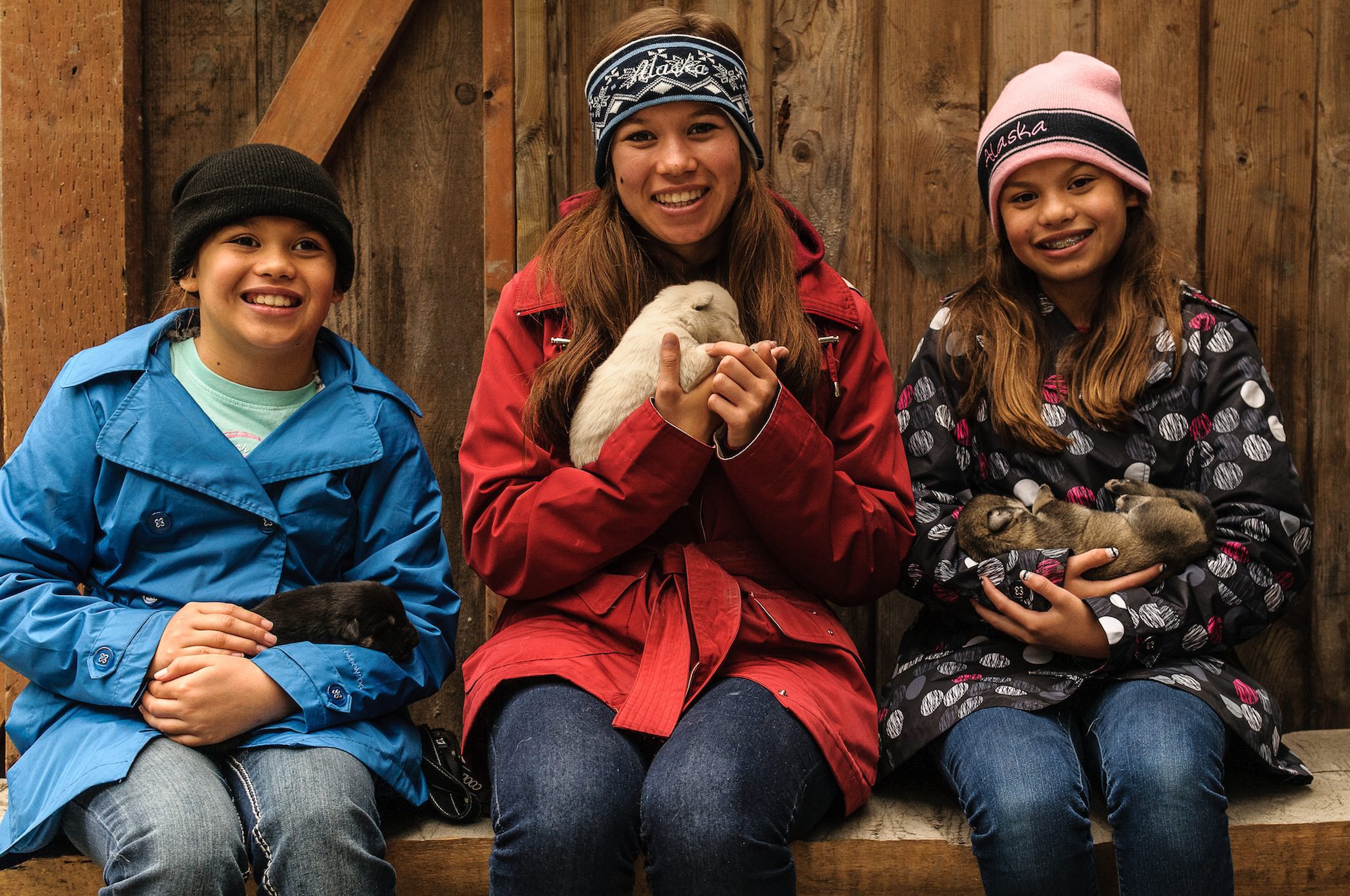
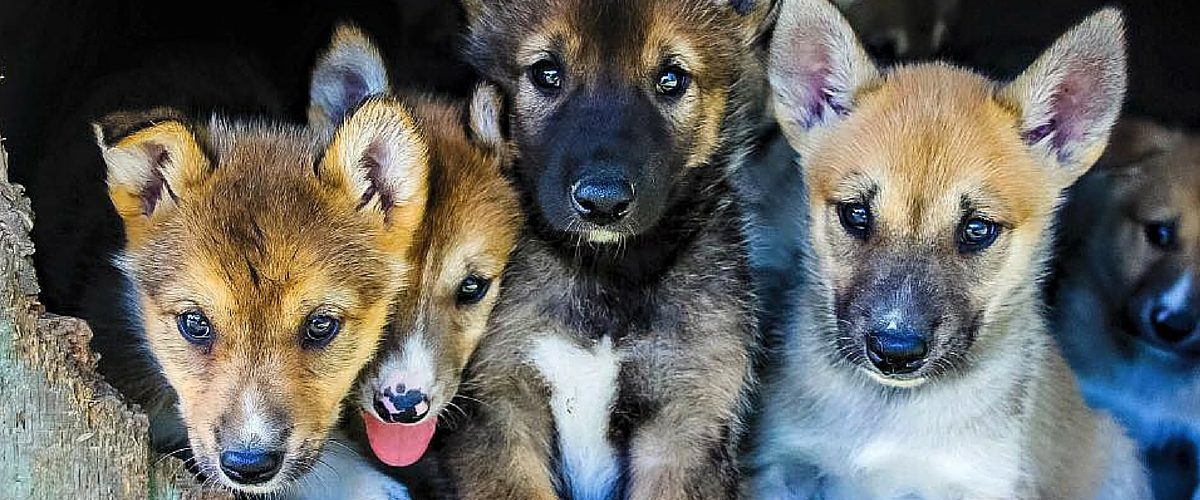
Many dog sled tours will have puppies for you to hold as it helps socialize them.

Although different companies will always offer differ experiences there are generally a few highlights that remain the same regardless of what kind of tour you choose to do or who you choose to do it with. Puppies are commonplace at almost any dog sled tour operation in the state. Mushers want their young dogs to be socialized and who better to socialize them then lots of young visitors? If, however, you find yourself visiting during the early part of May there many not be puppies simply because they haven’t been born!

Alaska Kennel Tour And Sled Dog Demonstration

A kennel tour and mushing demonstration is a great first introduction to mushing. Generally, these tours are designed around theatrical experiences that showcase the passion sled dogs have for running. What’s great about these operations is that they will keep you captivated from start to finish: there is no lull in the excitement.

Kennel tours also provide a great glimpse into how these dogs live day-in-and-day out as you get to experience the day-to-day life of a sled dog.

One of the most popular kennel tour’s in Alaska today is Jeff King’s Husky Homestead tour. Jeff King is a four-time Iditarod champion and has also received awards for great vet care. If you are visiting Denali National Park, his kennel is a great place to go to learn more about Iditarod and dog sledding.

Denali National Park also does a short sled dog demonstration to park visitors focused on the role of sled dogs in helping protect the park. It is not as an in depth as a full kennel tour and demonstration but it is perfect for those on a tight time schedule or budget.

Summer Alaska Dog Sled Rides

The summer dog sled ride is arguably the most popular dog sled tour in Alaska. It is affordable and still gives the dog mushing experience. In fact, as mushers, we spend a good chunk of our training season running our dogs without snow – so even though these tours are run on wheeled carts over dirt, they are still very authentic. From September to the end of November, mushers spend thousands of miles on ATVs training their sled dogs without snow.

Jane leading a dog sled tour
A dog sled ride at Turning Heads Kennel led by Iditarod musher Travis Beals

Summer dog sled rides range from 1 to 2 miles depending on the weather. Most of the bigger summer dog sled tour companies such as Alaska Excursions In Juneau and Skagway and Seavey’s Ididaride in Seward, Alaska can have as many as 250 visitors on a busy day. Because of the high volume, many of the tour guides are mushers in training.

What’s really exciting about going on a summer dog sled ride is seeing the dogs enthusiasm and witnessing their power. Did you know that a team of sled dogs can, quite easily, pull 8 full grown adults? It’s an amazing strength training program for the dogs to be in and its exciting for guests to be a part of it.

Our own dog sled ride is kept small. During a busy day, we may have 10 or 15 people visit our home who we get to introduce to dog mushing. Travis or I lead a majority of our dog sled tours, though we both believe in taking time off for ourselves too. When we do take time off, we hand them off our tours to our apprentices who’ve been training with us and have had time to learn the dogs and spend lots of time out on the trail.

Our tour requires experienced staff because our ride also serves as part of our lead dog training program. Every time we hook the dogs up, we believe they should be learning something or working towards our goal of being Iditarod champions. It’s really fun for us to share training with our guests! We are also continually making improvements to our kennel for our dogs and for our guests. We combine the best part of a kennel tour and demonstration with a dog sled ride!

Glacier Mushing: Alaska Dog Sled Tours

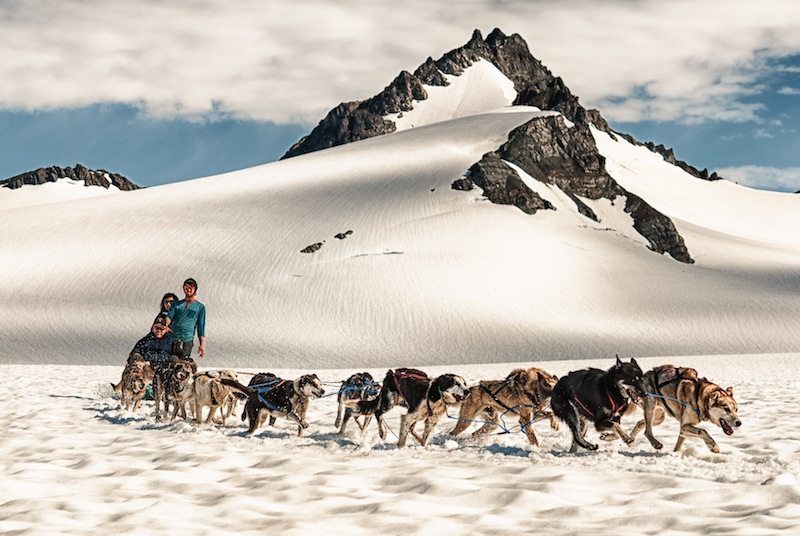
Glacier dog sled tours are an incredible experience if you can afford the hefty price tag. Glacier dog sledding is the apex of summer musing in Alaska. Take a helicopter to the top of a glacier, get out on the snow, and go dog mushing. It is a breathtaking experience from start to finish. Glacier dog sled tours range dramatically in price from $519 for our dog sled tour to $650 for some of the dog sledding tours in Juneau and Skagway.

After the run, our dogs wait happily to have their booties removed and their feet rubbed!

One of the biggest difference between operations in South Central Alaska and Southeast Alaska is scale. Glacier dogsledding tours in Juneau, such as Alaska Icefield Expeditions, and Temso Helicopters in Skagway receive tremendous amounts of volume due to the heavy traffic cruise ships bring. These camps are large and have approximately 200 dogs and 15 staff members on the ice at all times. It’s quite a sight to see. These tours are used to large volumes and do an excellent job of making you feel like you have your own private excursion.

We currently operate the smallest glacier dog sledding operation in Alaska with Seward Helicopter Tours. We generally have about 30 dogs up on the glacier. Unlike other operations which bring dogs in from all over the state, our kennel is located in Seward so if we need to give dogs rest days, we can easily swap dogs.

Glacier Dog Sledding Tours

When booking a glacier dog sledding trip, we always advise people to book it for the first part of their time in Seward as occasionally trips get cancelled due to weather.Our policy is to rebook if a client’s schedule allows at the earliest possible time that is convenient for them. If they cannot reschedule we give a full refund.

It’s also important to remember that glacier dog sledding requires good snow conditions. Many glacier dog sledding tours will advertise staying open until the end of August, only to close around the 15th or 20th of the month as snow conditions deteriorate.  We are fortunate that our dog sled tour on Godwin Glacier always has plenty of snow due to the local geography. Last year we closed mid-September and ended up taking bookings from other dog sled tour companies in Alaska who couldn’t fulfill their obligation.

Dog Sledding In Alaska Is A Must-Do

No matter what type of dog sled tour you choose to take in Alaska or who you choose to do it with, your trip will certainly be memorable experience. We hope that by taking a summer dog sled tour you will become interested in our sport.

Interested in learning more? Ask us your dog sledding questions on facebook or shoot us an info request.

Book Review: A Dog’s Purpose

Sarah · January 23, 2015 ·

One of the things people are most surprised to learn is that we don’t have cable. Although we do have television and an active Netflix subscription, we don’t spend much time watching it. When we do have time to relax, we enjoy reading. Travis read and re-reads mushing books and I read just abouth anything I can get my hands or ears on – I’m a big audiobook fan.

Although we certainly won’t do it all the time, I thought it would be fun to share some of what we read. I’ve often found it hard to find good books about mushing or dogs and know that it’s one of the things many people often ask before and after they visit us. Although many people think of “armchair mushing” referring to following races from home, I like to think of it more broadly to encompass any way a person can experience mushing without actually being on the trail.

So we are going to talk about books. Right now, I’m reading A Dog’s Purpose by W. Bruce Cameron. It’s not a book about mushing but it is a fantastic book about a dog. This book spent multiple weeks on the New York Time’s best seller list after it was published. It’s an easy book to get lost in. Many times I’ve picked it up and told myself “just fifteen minutes” but, an hour later, have found my nose still stuck in its pages and my chores left undone.

The book follows the progression of one dog through many different reincarnations as he tries to discover his purpose in life. Interestingly, the book is written from the dog’s point of view and there are so many delightful descriptions that you read and think ”my dog does that!” or “yes that’s exactly what my dog would think!”

Some of my favorite details so far:

“I especially didn’t appreciate it when, with a flick of her tail, Flare [the horse] dropped a smelly pile of poo on the road, narrowly missing me. I lifted my leg on it because it now, after all, belonged to me, but I felt fairly certain the horse had meant the thing as an insult.” (115)

Upon the cat’s death: “I nuzzled them both to remind that that there really was no need to grieve, since I was ok and really a much better pet than Smokey ever was. The next day, after Mom and the boy left for school, I went out into the yard and dug Smokey back up, figuring they couldn’t have meant to bury a perfectly good dead cat.” (133)

“When she hugged the boy, there was so much love between them that I couldn’t help but try to squirm in between their bodies, which always made them laugh.” (166)

These wonderful descriptions fill page after page and it’s easy to get lost in the story and the stories within the story. Besides his own life and experiences, the dog’s descriptions of human relationships are equally entertaining and at times heart-wrenching. The dog doesn’t always have perfect understanding of why his humans are suffering. All he knows is that their joys, are his joys and their sorrows, are his sorrows.

Reading has often left me both happy and sad as the dog finds new people to share his life with, enjoys his time with them, and then passes on into a new life. I’ve closed the book many times teary-eyed after the dog has reached the end of one of his lives.

I’d strongly recommend this book to anyone who loves dogs. I’ve enjoyed the creative approach to this book and have thoroughly enjoyed it.

.

The Historic Iditarod Trail

Sarah · January 13, 2015 ·

The Historic Iditarod Trail

Long before there was a dogsled race, the Iditarod trail served as a vital part of the early Alaskan economy. The historic Iditarod trail ran from Seward, Alaska to Nome, Alaska. The purpose of the trail was to get freight from the northern most ice free port of Seward into the interior of the state. The trail was primarily  a dog sled trail — although the portion from Seward to Nenana was eventually taken over by the Alaska railroad.

According to the Alaskan Bureau of Land Management, from 1880 to the early 1900s “the non-Native population [of Alaska] boomed from 430 people in 1880 to some 36,400 in 1910” due to the gold that was being found in Nome, Iditarod, Hope, Ophir and Ruby. The trail provided a valuable lifeline and dog sledding became the preferred method of travel.

The 1908 discovery of gold in Ophir and Ruby was one of the largest gold discovered with approximately $30 million worth of gold being removed from the areas. Although river traffic could provide transportation in the summer months, after freeze-up transportation relied solely upon the dogs.

Traveling on these trails was made easier for mail carriers by establishing cabins along the way, approximately every 20 or so miles. These roadhouses served as a convenient place for the couriers to rest their dogs at days end so they could continue down the trail. The mail the couriers brought was a welcome relief from the isolation that the long, dark Alaskan winters often brought the prospectors. Most couriers only ran a small section of the Iditarod trail, relying on relays to get mail and other essential freight in and out of the interior.

But as quickly as the miners came, the onset of world war 1, the rise of the airplane, the “drying” up and the consolidation of the gold field claims, saw the miners leave. By the mid 1930s all but a few of the dog sled mail couriers had been replaced by bush pilots.

The trail then fell into limited use until the Iditarod Sled Dog Race began in 1973 as a way to help preserve dog sledding in the state of Alaska.

The Historic Iditarod Trail with other significant Alaskan Routes
The Historic Iditarod Trail. This map is great as it also shows the 1925 serum run that helped make dogsledding famous!


The Iditarod Sled Dog Race

Against popular belief,  The Iditarod Sled Dog Race does not commemorate the famous 1925 serum run to Nome (the green dotted line on the map above) ; the race commemorates the famous gold & mail trail that ran through the interior part of the state. By 1977 the Iditarod trail had become a national historic trail. Not only did the race serve as a way to help mushing stay alive, it also helped the trail become a national landmark. You can learn more about the Iditarod sled dog race on our blog post What Is The Iditarod Sled Dog Race.

Additional Resources

There are a number of resources available for those wanting to learn more about the historic Iditarod trail. The Alaska Bureau of Land Management has a great website with lots of historical information. You can check that out here. The Iditarod Historic Trail Alliance is a group of individuals dedicated to the continued preservation of the Iditarod trail. They have some great information for anyone wanting to learn more. You can visit their website here. Additional trail information is also available from the Alaska Department of Natural Resources.

  • « Go to Previous Page
  • Page 1
  • Interim pages omitted …
  • Page 3
  • Page 4
  • Page 5
  • Page 6
  • Page 7
  • Go to Next Page »

Turning Heads Kennel

© 2026 · Turning Heads Kennel . Sitemap

  • Home
  • Tours
  • About Us
  • Contact
  • Shop
  • Support
  • News