• Skip to primary navigation
  • Skip to main content
Turning Heads Kennel

Turning Heads Kennel

Alaska Dog Sledding Tours

  • Home
  • Tours
    • Summer Tours
      • Summer Dog Sled Ride
      • Summer Dog Sledding & Gold Panning Combo
      • Helicopter Glacier Dog Sledding
      • Flight Seeing 🚁
    • Winter Tours
      • Winter Dog Sledding Tours
  • About Us
    • Our Mushing Philosophy
    • 2025 Crew
    • The Dogs
      • Meet the Dogs
      • Learn About Dog Sledding
      • Adopt A Retired Sled Dog
    • Our Life
      • Travis Beals
      • Sarah Stokey
      • Our Story
      • Racing Schedule
      • Travis Beals Racing History
  • Contact
  • Shop
  • Support
  • News
  • Show Search
Hide Search

Iditarod

Just Mush

Sarah · March 3, 2016 ·

This morning, things finally got real. As we sat throug meetings and trail reports, the Knots I hadn’t felt all season slowly started twisting in my stomach.

I have been so sure and confident with too much to get done to have time to worry. But here we are, in the final stretch and suddenly  I’ve realized what it is I’ve signed up for. It’s not just a thousand mile race. This is the race. Growing up, whenever I faced what I thought was a gargantuan task or something that seemed near impossible I told myself this is your Iditarod training. Soccer pratices where we did wind sprints until some of the girls puked. Waking up at 3 in the morning to summit mountains. Overcoming my fear of heights to be a rock climber.

All my life.

This is the goal that has pushed me forward.

And now here I am, standing at the edge of the cliff waiting to jump in.

Anticipation is the worst kind of worry.

But for now, I’m telling myself to just breath deep. Travis has a mantra – Don’t sweat the small. It’s all small stuff. And I’ve been repeating it over and over. 

Don’t worry.

Just mush.

It’s all just dog mushing.
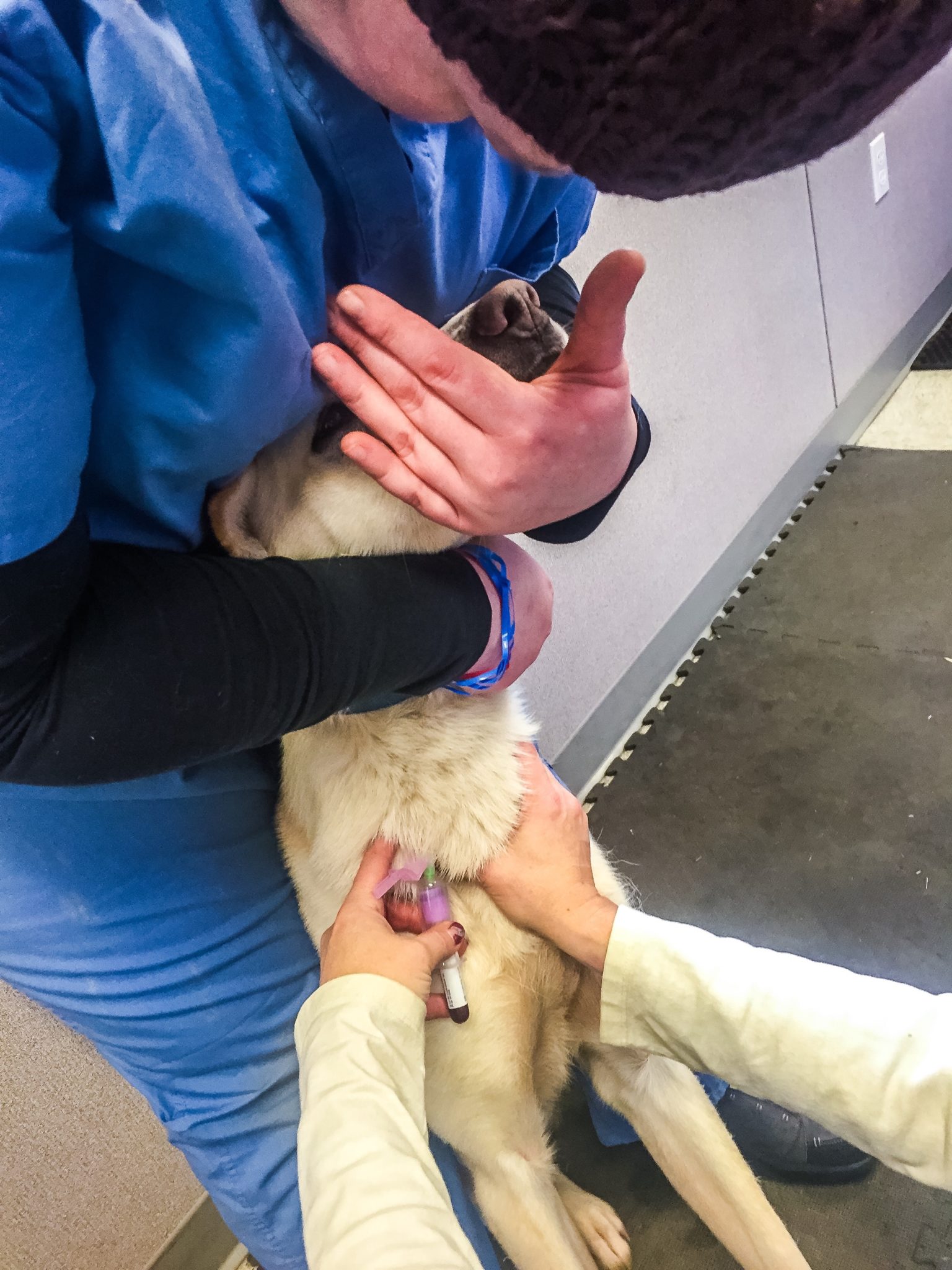
Iditarod Bloodwork & ECGS

Sarah · February 22, 2016 ·

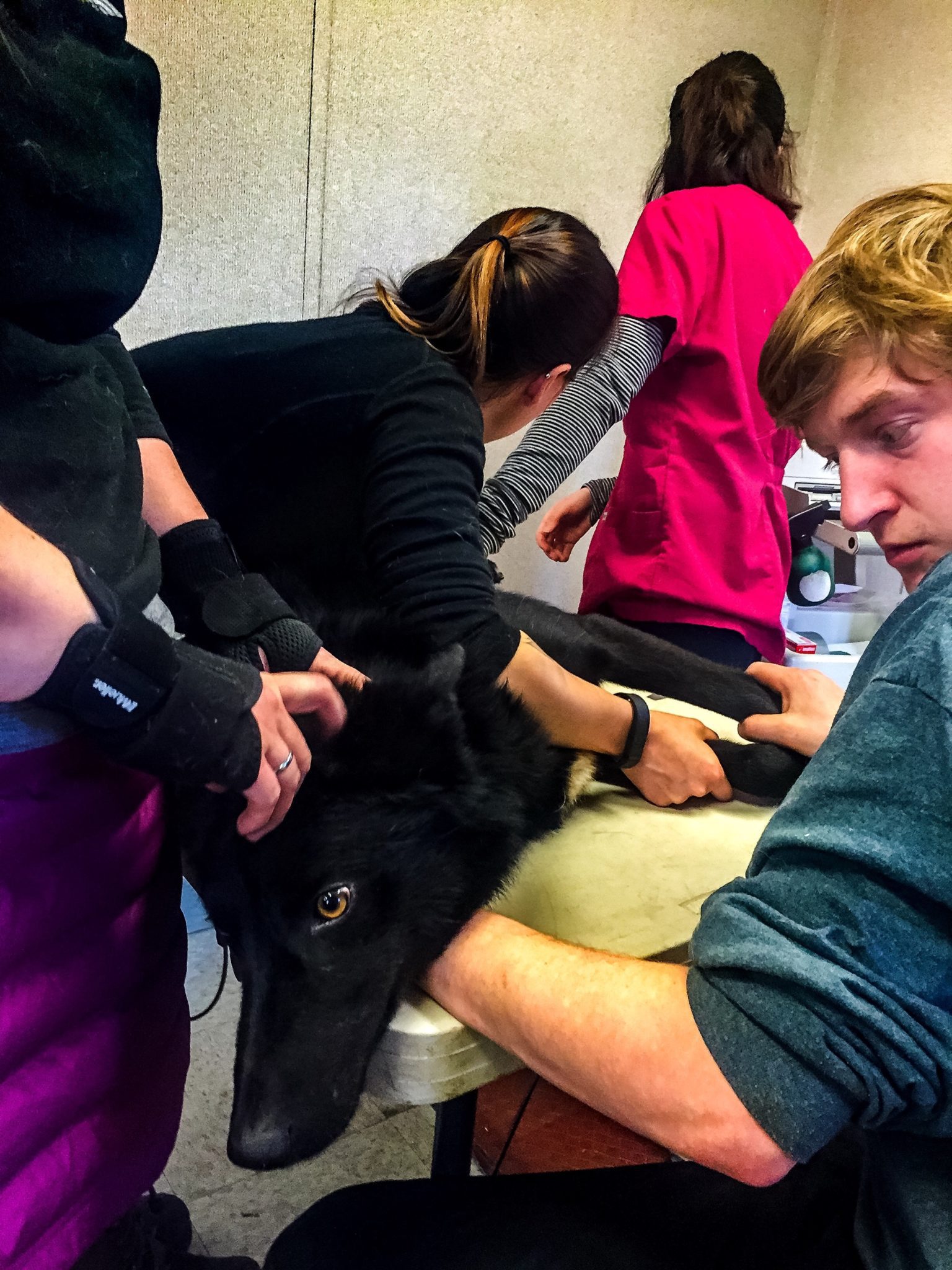
We recently took our dogs for their pre-race health checks  which includes Bloodwork and an ECG for each canine athlete. 

IMG 6807
Kip gets his blood drawn. Two vials are taken from each dog.

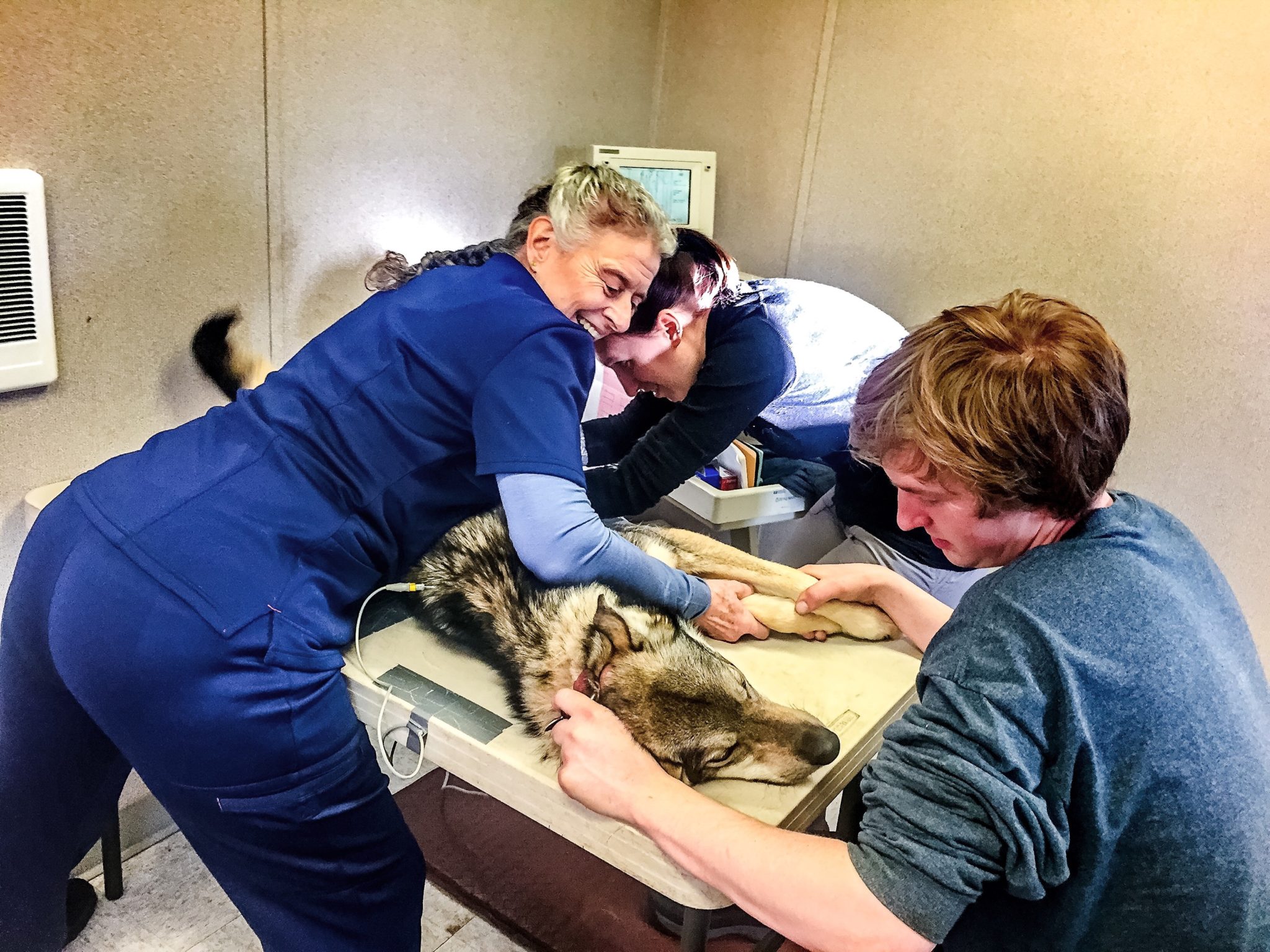
The ECGS are used to help eliminate any dogs who may be predisposed to having cardiac trouble from participating in the Iditarod.


IMG 6839
Teddy is put on his side and held in place for his ecg
Iditarod gives ECGs as a part of its dog care program
Iditarod Bloodwork & ECGS 6

Blood is also taken and a variety of things are measured to help determine which dogs, at a cellular level, are more statistically likely to finish the race. These values can be used to help mushers determine which dogs to take.

Each musher is allowed to have up to 24 dogs vet checked. This allows mushers to continue to work with a larger pool of dogs. 

For our kennel, we are able to vet check a combined 48 dogs between Travis and myself. We are actually allowed to swap dogs until we declare our final 20 dogs at the ceremonial race start.

As you can imagine, getting blood work done for 86 dog teams is no easy feat. Talking to the vet techs, who help make this happen we certainly learned how much goes into making sure every canine athlete is physically fit for the race. It takes over 20 days to do all the screenings for all the teams entered into the race.

We are fortunate that there are such dedicated volunteers who helped make this happen to helensure the safety of all dogs to participate in the Iditarod. We are also grateful that this is cupboard and part of our entry fee. What’s yours are actually able to sign paperwork that allows these blood samples and the results to be given to those in the scientific community to help continue on researchingsled dogs so that we can continue improving upon our dog care.

We’ve already learned a lot about the dogs because of the implementation of doing bloodwork. One of the most important things we’ve learned for example because the importance of vitamin E in muscle recovery in our dogs.  Because of this, almost every Mosher supplements with a high-quality vitamin E.research a shown that dogs supplemented with vitamin E are far more likely to finish the race then dogs who are not supplemented with it.

Bloodwork can also be used to screen for such things as muscle myopathy, a condition in which the dogs muscles start to deteriorate and can lead to serious problems. Understanding this ahead of the race can allow mushers to take different dogs or take extra precautions.

After the blood work results come in, Stu Nelson the head veterinarian for the Iditarod calls each musher to discuss any significant findings so that mushers can make the best decisions for their team selection and help ensure the safety of all the dogs. 

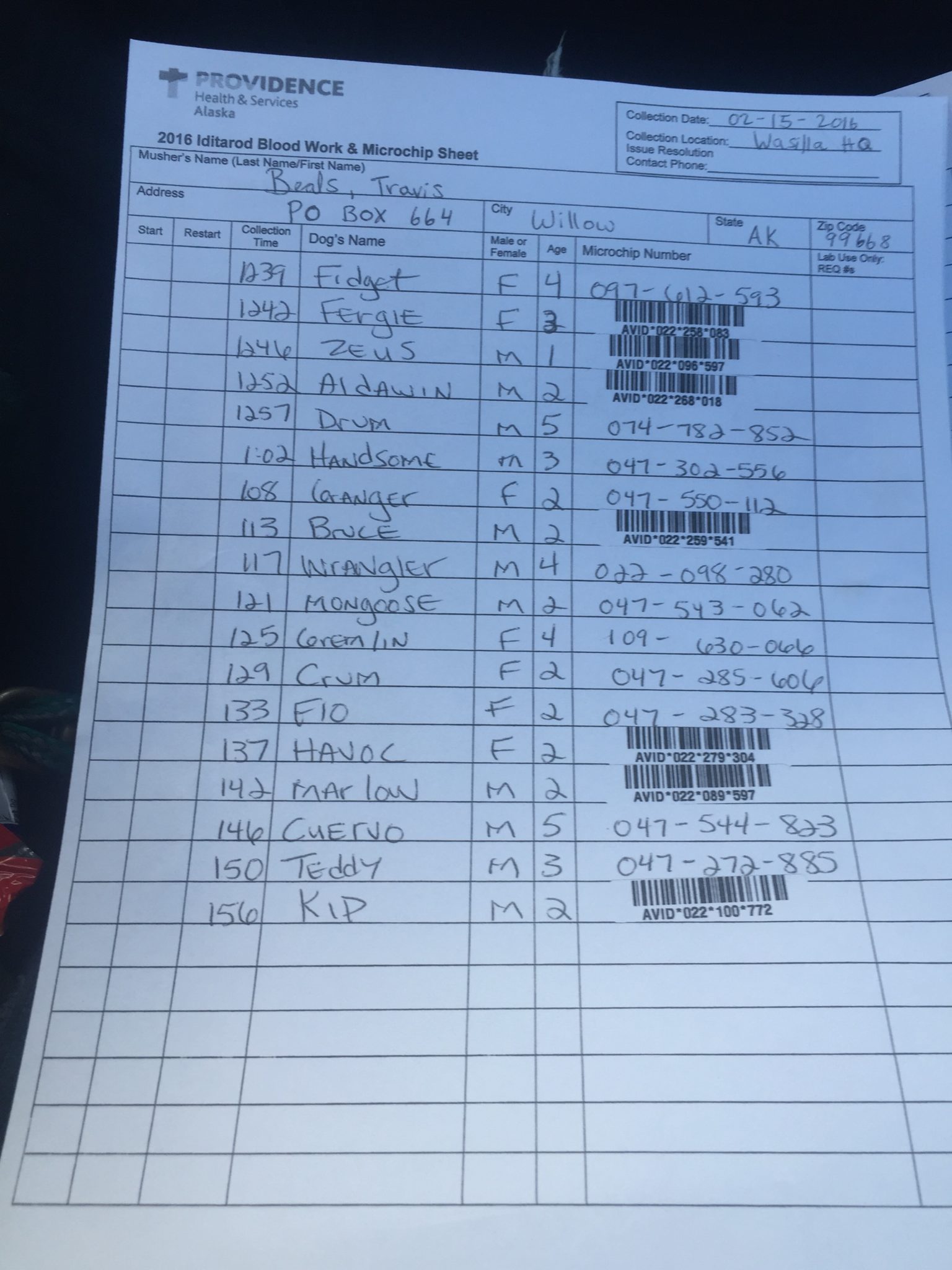
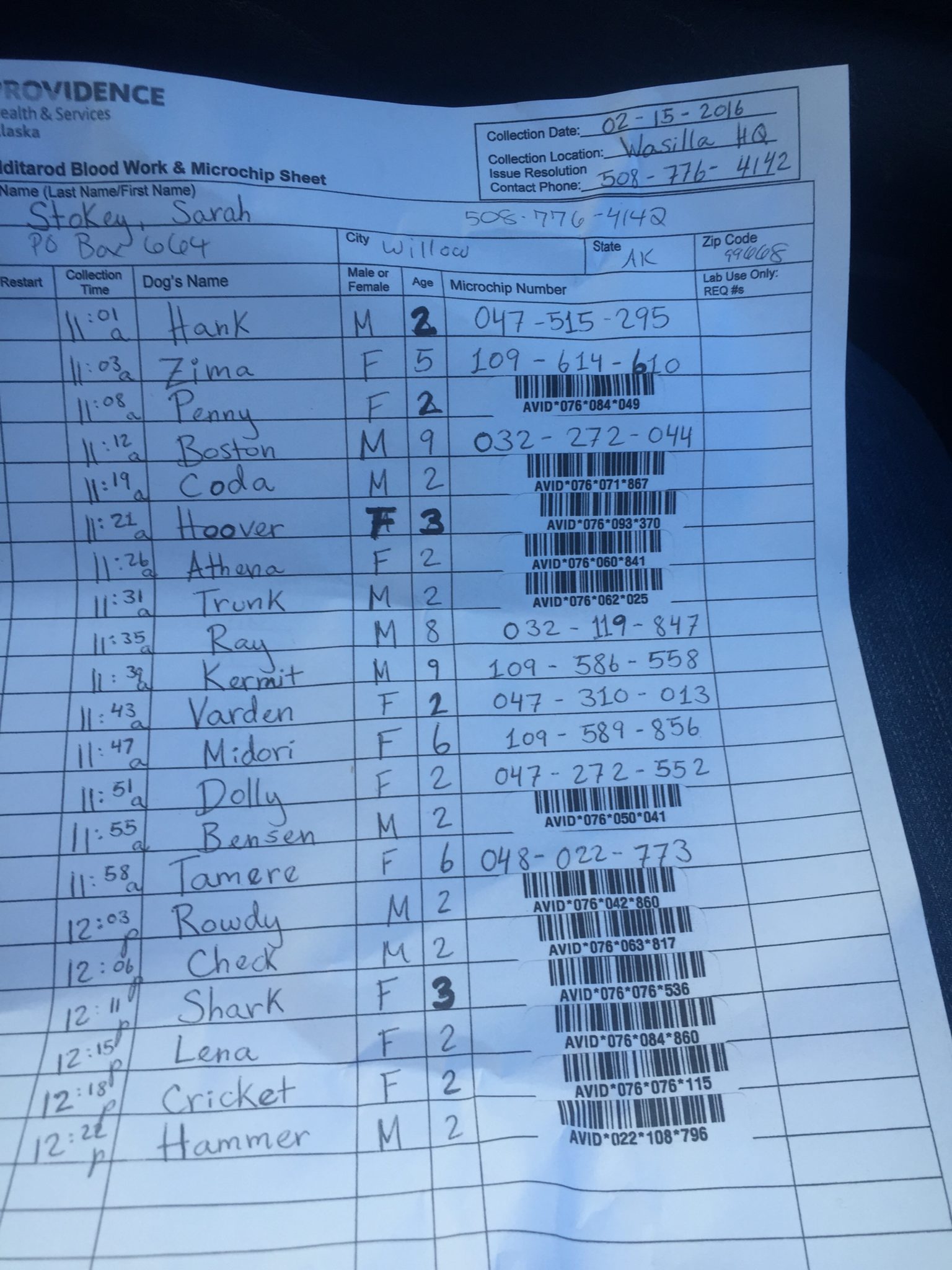
Here is a preview of our Iditarod line-ups:

IMG 6802
Iditarod Bloodwork & ECGS 7
IMG 6800
Iditarod Bloodwork & ECGS 8


This is just one of the many many ways Iditarod mushers and veterinarians workto ensure quality dog care and dog health from the get-go. Ironically, even though the dogs go through all these pre-race screenings, Their human counterparts are subject to no such testing. As a musher we do not have to have a doctors note, A doctors consent, or even proof that we are healthy enough to race. Everything about this event is focused on the dogs.

Slowly Preparing for the 2016 Iditarod

Sarah · January 30, 2016 ·

I’ve been starting to work on drop bags. The easy parts. Packaging granola bars and Capri suns. I eat like an NFL defensive lineman when I’m out on the trail so outfitting me with food is no small task. Fortunately, both Travis and myself are well supported by our town of Seward. Dan and Madeleine Walker lead the team of Sewardites in cooking us trail meals. They coordinate donations and then go out of their way to make sure everything is vaccumed sealed. It is one of the most unique and helpful ways the Walkers have chosen to sponsor us — it frees up a tremendous amount of time not worrying about it.

In the next week, I’ll start working on packaging hand warmers, gloves, extra hats, and neck gaiters as well as extra sets of clothes to send out. It is so relieving and refreshing to put on a new pair of clothes out on the trail. I’m sad though because I only have one set of my favorite pair of long underwear. I’m seriously considering buying a second set!

The dogs have been doing great. Today I left with a 14 dog team and quickly tipped the sled and skidded for a ways before jamming in my snow hook. For a moment, I thought it was all over. I banged my wrist pretty badly and immediately thought the worst. I quickly realized I was over reacting and that I was just fine. I guess my nerves are starting to get me! But boy, does this team have power. I was on my brake for the entire run. They were wired. 

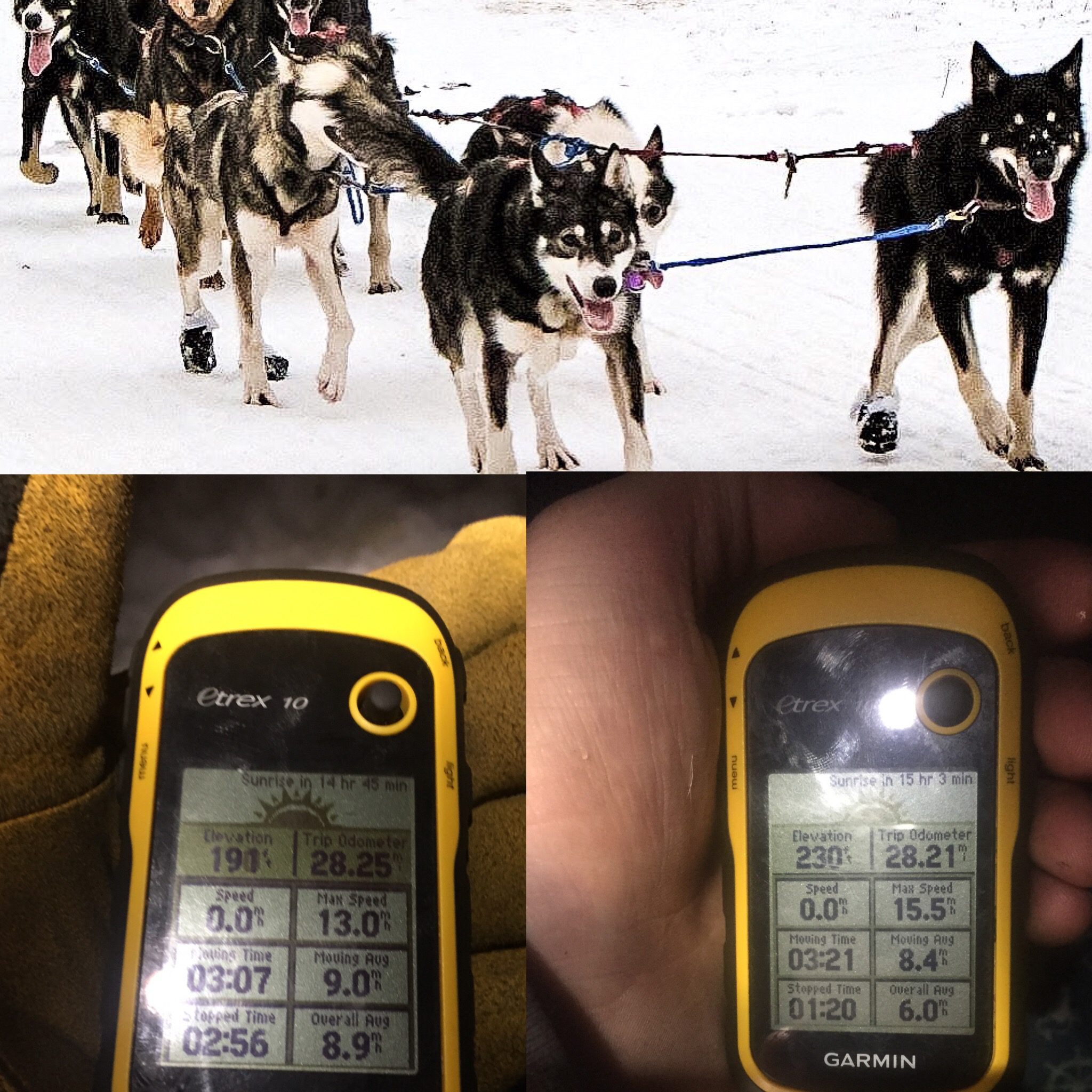
I really had a great run with the team. After I got back, Travis and I compared field notes – also known as photos of our GPS and were amazed to see that we’d gone practically the same mileage despite not talking to one another, training out of different areas and running on seperate trails. 


IMG 6618  
At night, I’ve been trying to be productive – by packaging up things for food drops or doing other things to prepare me for the ‘big’ day. I should have made necklines tonight or worked on my toggles for my gangline. Instead I binged on Law and Order SVU and relaxed by doing some art. I can never get enough of Oliva Bensen, so much that I even named a dog after her ( a boy) who is currently on my team. I wanted to name a whole litter after SVU characters but that got the vetoed. I’m sure I’ll have another opportunity!

Anyways, it’s late and I have all the work I didn’t do – toggles, labeling drop bags, running again – to do tomorrow. Things are sneaking up fast!

I am excited because my sister confirmed last week her plane tickets and I just got an email from my brother with his plane ticket. My whole family, minus my amazing brother in law and my two adorable nephews, will be at the starting line to send me off on my way to Nome! I am beyond thrilled!

Happy trails,

Sarah

2016 Pre-Iditarod Interviews with Greg Heister

Sarah · January 19, 2016 ·

Wow! Greg Heister the voice of the Iditarod stopped by our kennel this afternoon to interview Travis Beals and Sarah Stokey about the 2016 Iditarod

coda
Coda

We thought it was really cool that the Iditarod is working so hard this year to give fans an extramarital glimpse into our lives and kennels. 

dolly
Dolly

Greg asked me how I originally got started in mushing, what I liked about the sport, and ask me to introduce two of my favorite lead dogs. I choose Coda and Dolly, up-and-coming dogs in our kennel.

IMG_5189.JPG
krun
flo
flo
wrangler
wrangler
Fidget
Fidget

Travis also talked with Greg though I couldn’t quite hear what they were saying. I am sure Travis talked excitedly about his year’s race preparations which, so far, are going quite well. Travis talked to Greg about 3 of his dogs: Wrangler, Fidget, Flo, and Krum.

We don’t know when this clip will air but you have to be a iditarod insider so, if you haven’t already signed up, please do so!

Travis Beals being interviewed by Greg Heister for the 2016 Iditsrod
 
Happy trails,

Sarah

A Special Focus On The Iditarod Vet Book

Sarah · December 30, 2015 ·

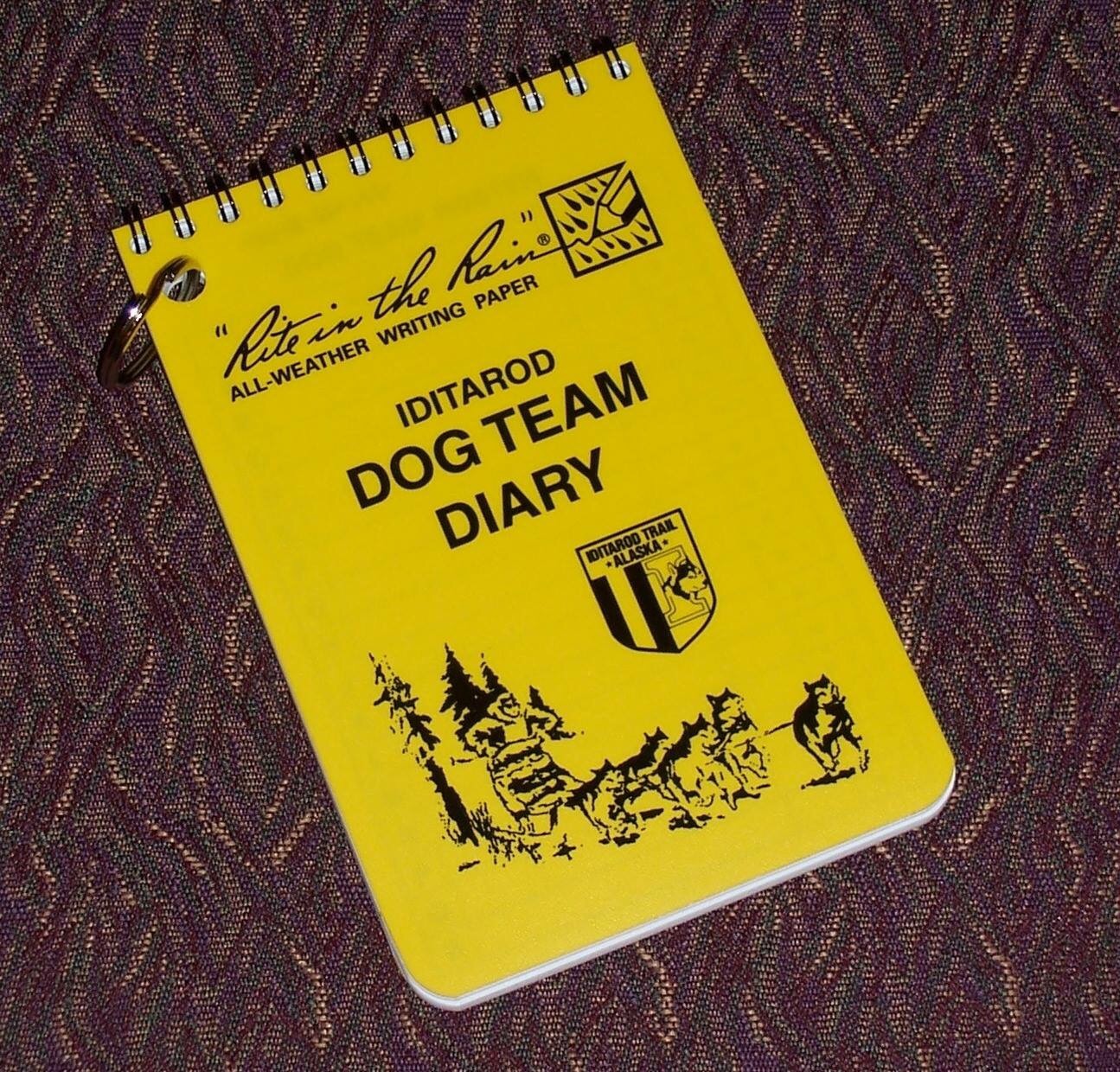
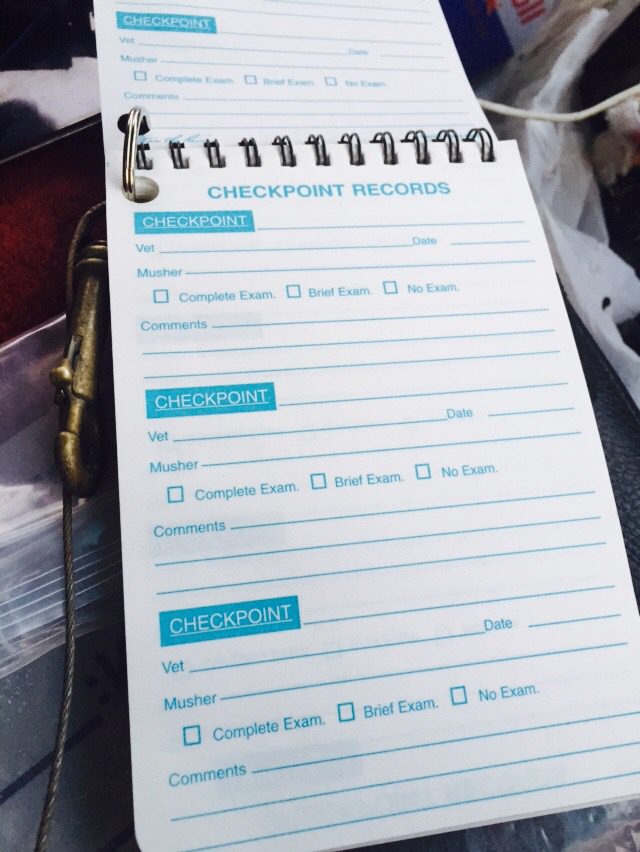
One of the things most new fans to dog sledding want to know is how are dogs are taken care of out on the trail by vets and how the logistics of so many dogs is managed. During Iditarod and other dog sled races, mushers must carry a vet book. In Iditarod, it is a mandatory piece of gear and mushers are required to have a vet sign it at every checkpoint to ensure the dogs have been examined.

Each dog on Iditarod is given its own unique identification tag. The identifcation tag is composed of two values, a number and a letter.The number refers to the musher. Each musher’s value is determined by their starting position. In 2015, Travis started 56th so each of his dogs had a “56” on their tag. Each dog is then individually assigned a letter. Each musher is given their own tags so we put our tags 56A, 56B, 56C, on each dog on Travis’ team.


photo courtesy of Dianne Johnson of thhe Iditarod Trail Committee

 
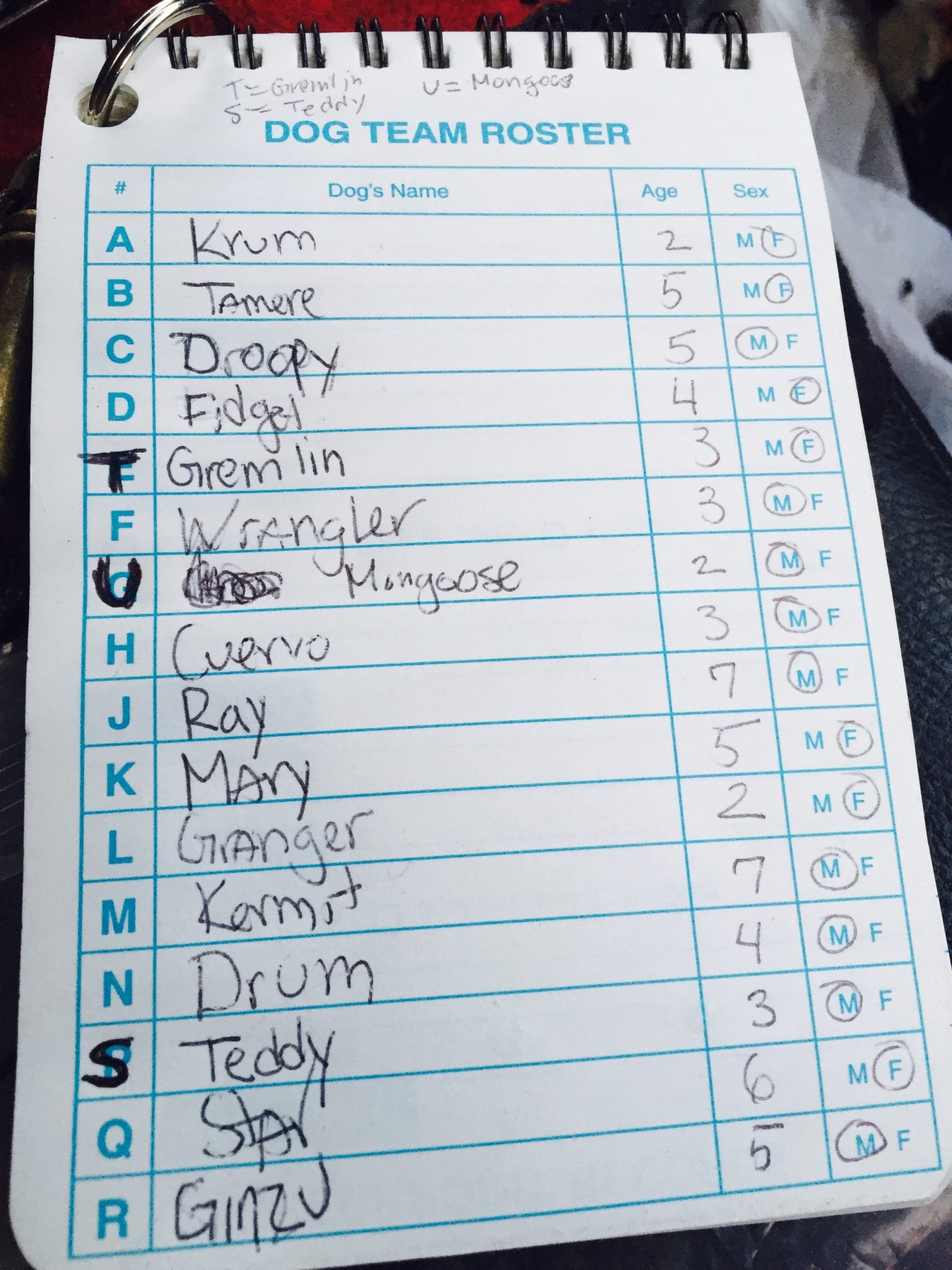
At the front of the vet book, each musher lists their dogs name and next to their dog writes down the letter of the tag that dog was given. Additionally, Iditarod takes down the name, tag of each dog, and their microchip number. This way dogs have two identifiers out on the trail: their microchip which can be scanned or their dog tag on their collar.

The vet book is an integral way for vets at different checkpoints to communicate what they see in a dog or in a particular dog team. It allows volunteers to quickly look up the name of a dropped dog and relay it to those back in Anchorage.


2015  Iditaods Travis Beals Vet Book. The starting 16 dogs.
2015 Iditaods Travis Beals Vet Book. The starting 16 dogs.


travis beals 2015 iditarod vet book. the first page has each dog, their
travis beals 2015 iditarod vet book. the first page has each dog, their “letter”, and their age.

 The vet book itself is rather small and is waterproof. Many mushers elect to tie it to their sled. If you do not have your vet book, you cannot continue down the trail. If you forget your vetbook at one checkpoint, you have to go back and get it — wasting valuable time.

We generally tie our vet books to our sleds so that we cannot lose them. It allows us to access them quickly and prevents the volunteer vets from accidently walking away with them.

Mushers are required to have a vet sign their vet book at each checkpoint. Mushers also have to sign the vet book. The vets may make notes or may simply put an “all good” or a smiley face. Common notes might be about dogs who were prescribed antibiotics.

The vet book is a valuable tool to help mushers and vets make sure that the dogs get the best possible care while out on the race.

This year in training, I am carrying my own “vet book” so that I can practice not losing it. For those who know me, they know my struggle. My book, however, is a bit different. I am using it to make notes about dogs on or directly after a run so that I can keep the best records possible on my team while training myself to hold onto the small yellow notebook. My notes are usually about when I fed or watered and the effects I’m seeing in my dogs. It’s something Aaron Burmeister mentioned casually at the rookie meeting so I figured I would give it a shot. If I’m going to practice carrying a notebook, I might as well make some notes!

  • « Go to Previous Page
  • Page 1
  • Page 2
  • Page 3
  • Page 4
  • Page 5
  • Interim pages omitted …
  • Page 7
  • Go to Next Page »

Turning Heads Kennel

© 2026 · Turning Heads Kennel . Sitemap

  • Home
  • Tours
  • About Us
  • Contact
  • Shop
  • Support
  • News